


 Français
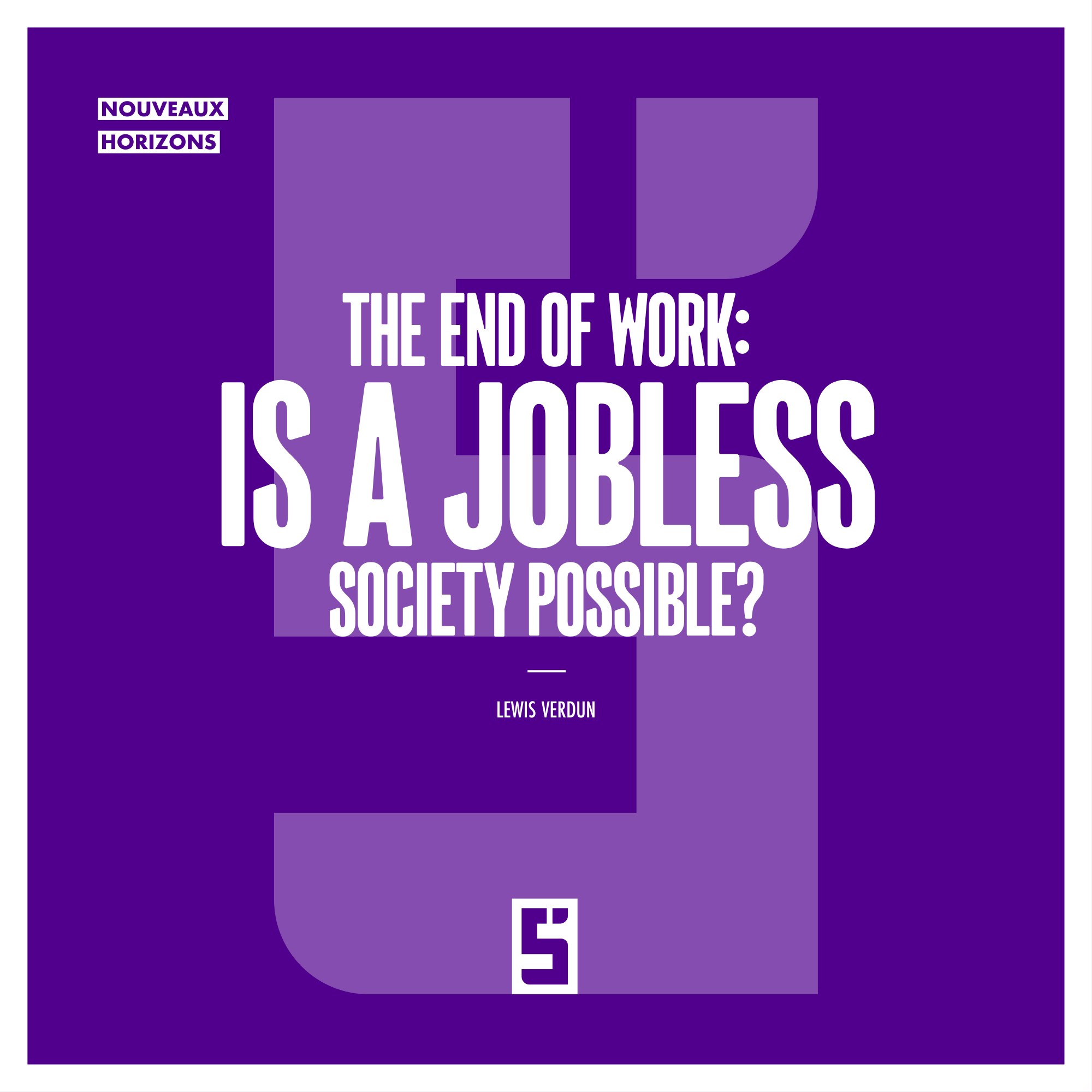
 What if, tomorrow, most jobs disappeared? If machines could write, program, and manage better than we do? The idea of a society without work—once a utopia or a dystopia—is resurfacing as artificial intelligence seeps into every sector. In The End of Work: Is a Jobless Society Possible?, Léwis Verdun offers a lucid analysis based on the latest 2024–2025 studies, separating myth from reality.
A revolution in work, not its disappearance
Apocalyptic predictions often claim that humans will soon be replaced by machines. Yet, the data paints a more nuanced picture: automation transforms jobs more than it destroys them.
According to multiple studies cited in this book, over 75% of knowledge workers already use AI to write, plan, or analyze. But global employment hasn’t collapsed. Tasks evolve, shift, and expand.
Secretarial work becomes digital process management; communication merges with data storytelling; craftsmanship is reborn through assisted fabrication. Verdun reminds us that every technological revolution—from the steam engine to the Internet—first sparked fear before generating new kinds of work.
However, he warns, this adaptation isn’t automatic. It requires training, support, and proactive public policies.
Artificial intelligence as a driver of inequality
Automation doesn’t affect everyone equally. Young workers, administrative employees, and service-sector staff are more exposed to job displacement. In contrast, roles in healthcare, education, creativity, and relationship-building appear more resilient.
Verdun highlights the AI exposure index, an emerging metric used by international institutions. It reveals a growing polarization: on one side, high-skill jobs that leverage AI for productivity gains; on the other, positions that are dwindling or becoming precarious.
The author advocates for a competence-based economy rather than one of replacement. The goal isn’t to eliminate human work, but to empower humans to work with the machine.
Toward an augmented society: four-day weeks and universal income
One of the book’s most compelling sections explores social experiments emerging in response to these shifts.
From four-day workweek pilots in the UK and Spain to basic income trials in Scandinavian regions, societies are rethinking how productivity relates to time.
Drawing on European reports, Verdun argues that these initiatives don’t mean the end of work—they mark a redefinition of purpose and balance. Early results are promising: improved mental health, stable productivity, and higher engagement.
The idea of a universal basic income remains controversial, but it shares the same spirit: valuing non-market activities (education, caregiving, volunteering) and securing the digital transition.
The work of tomorrow: hybrid, creative, and human-centered
Rather than announcing the end of employment, Verdun invites us to imagine a future where work becomes more fluid and meaningful.
Boundaries between employees, freelancers, and creators are blurring. The most valuable skills won’t be technical but transversal: creativity, empathy, critical thinking, and adaptability.
The book also examines the rise of gig work and solo entrepreneurship, fueled by digital platforms. While these offer unprecedented flexibility, they raise concerns about social protection and data rights.
In this new economy of meaning, companies must evolve: their mission is no longer just to produce, but to give purpose to production. Organizations that blend automation with human values will be the winners of the next decade.
Train, support, regulate: the three pillars of the transition
To prevent a “jobless society” from becoming a hopeless one, Verdun outlines three priorities:
Train: Strengthen digital, cognitive, and emotional skills.
Support: Build flexible reskilling systems accessible to all.
Regulate: Enforce ethical AI use to ensure fairness and transparency.
Together, these pillars—driven by collective action—can transform a feared crisis into a historic opportunity.
A book to understand and to act
This mini-book is more than an analysis—it’s a call to action. Concise yet comprehensive, it synthesizes key studies (OECD, IMF, Eurostat, Gartner, Pew Research, World Bank) and provides a clear framework for leaders, students, and citizens alike.
Verdun reminds us that the future of work depends on our ability to invent new ways to contribute. Artificial intelligence doesn’t end work; it redefines its purpose.
Download The End of Work: Is a Jobless Society Possible? today on FIVE MINUTES and join the global conversation on the future of employment.