


 Français
 Siblinghood is often our first school of social life. Even before friends, colleagues, or romantic partners, it is our brothers and sisters who teach us to manage conflict, negotiate attention, and build our identity in relation to others. Yet these relationships, often overlooked in psychological analysis, play a fundamental role in shaping our emotional well-being.
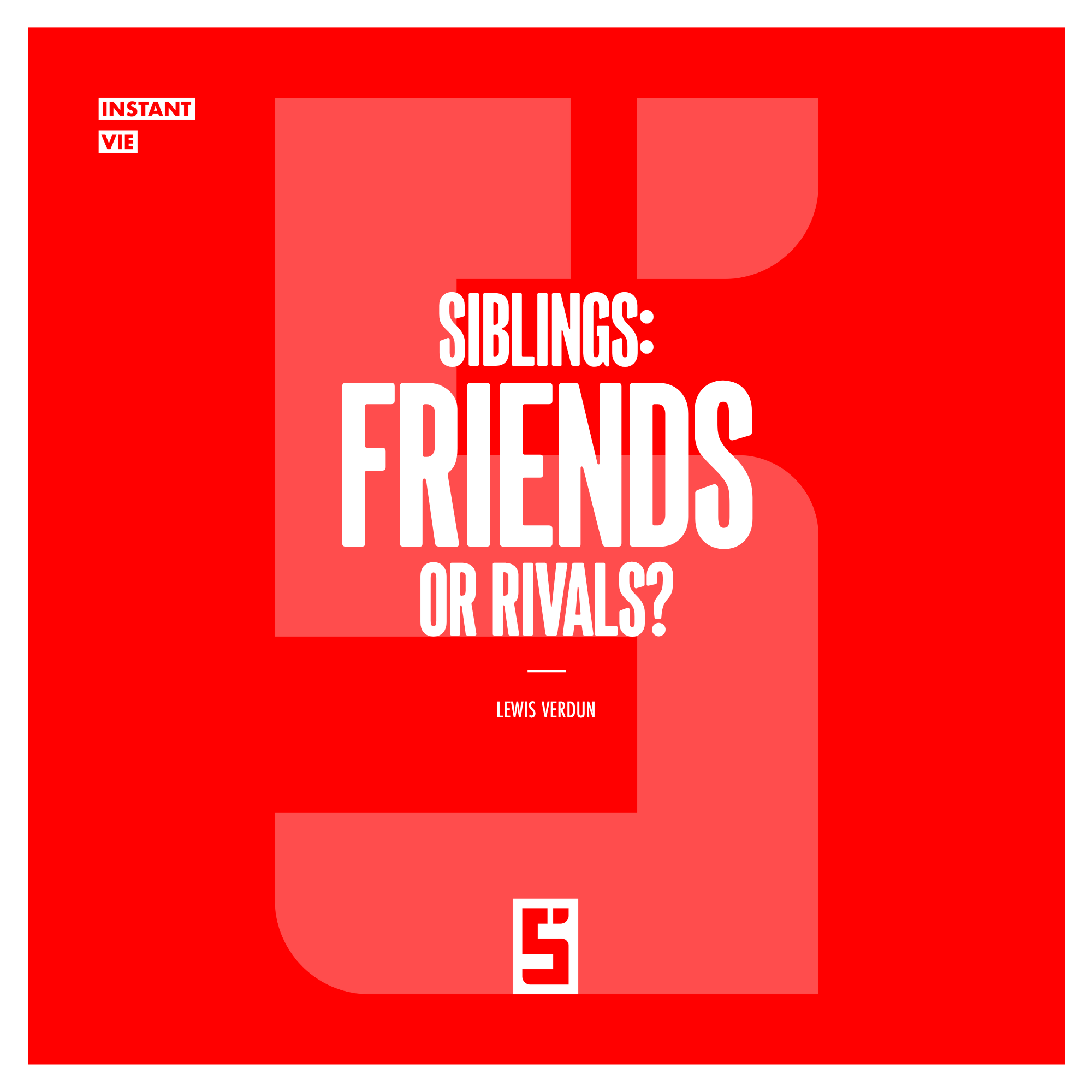
Through the book Siblings, Friends or Rivals? by Lewis Verdun, readers discover how sibling dynamics influence emotional, behavioral, and even physical trajectories. In this article, we explore a related theme: how sibling relationships affect mental and emotional health—a topic still too rarely discussed in parenting and education debates.
Siblinghood: an emotional mirror from early childhood
Sibling relationships serve as a permanent emotional laboratory. Whether the bond is close or conflicted, it contributes to the development of self-esteem, emotional expression, and frustration tolerance. Psychologists agree that these relationships can be even more decisive than parental ones in shaping some aspects of social-emotional development.
From an early age, cohabiting with a sibling forces a child to negotiate space, attention, and rules. This proximity can be a source of invaluable support or harmful tension. Author Lewis Verdun notes, based on recent research (2024–2025), that nearly a third of children experience sibling violence—often minimized or ignored by adults.
However, siblinghood can also be a protective factor. When based on mutual support and cooperation, it promotes emotional resilience, reduces depression risks, and encourages healthier behaviors, particularly during adolescence.
Birth order and age gap: often overlooked influences
Verdun also highlights the overlooked impact of birth order and age gap on psychological development. A child’s position in the family is not neutral—it shapes personality, emotional regulation, and authority relationships.
Eldest children, often given early responsibilities, may develop strong discipline but also a need for control or rigid perfectionism. Middle children may assert themselves differently—through creativity or rebellion. Youngest siblings often grow up in a more relaxed atmosphere but may struggle with visibility.
These roles are further shaped by age gap. A short interval can intensify rivalry, while a longer gap can encourage complementary roles (protector/protected) or lead to emotional distance.
When sibling tension undermines mental health
Disagreements are natural among siblings, but when left unresolved, they can become toxic. Tensions at home can foster anxiety, isolation, eating disorders, or aggression.
Verdun explains the concept of “dilution of parental resources”: in large families, time and attention are divided among many, creating perceived inequalities and fueling conflict. These imbalances, often invisible, may become embedded in adult relationships.
That’s why distinguishing between rivalry, constructive conflict, and aggression is essential. Not all conflict is harmful—some promotes self-assertion and negotiation. But it must be managed through clear boundaries, dialogue, and healthy emotional expression.
Encouraging lasting sibling harmony: practical tools
Verdun’s book stands out for its practical approach. Beyond analysis, it offers concrete strategies to transform tension into positive relational growth.
Here are some common problems and potential solutions:
Frequent quarrels: often a need for individual recognition. Schedule one-on-one time with each child.
Sense of injustice: often rooted in comparison. Emphasize each child’s uniqueness without ranking.
Isolation: may indicate emotional difficulty or exclusion. Create family dialogue spaces.
Aggression: reveals poor conflict regulation. Intervene early and establish clear rules.
Jealousy toward a sibling with special needs: cultivate empathy and shared activities to strengthen bonds.
Sibling relationships are more than childhood background—they shape our inner balance, worldview, and even our health behaviors. Still underestimated in psychology and parenting, they deserve to be seen as a central lever of family well-being.
In Siblings, Friends or Rivals?, Lewis Verdun offers a sensitive, research-based guide to understanding and nurturing these complex bonds. A must-read for building lasting family harmony.
Discover Siblings, Friends or Rivals? now on Five Minutes!
View the book page on Five Minutes