


 Français
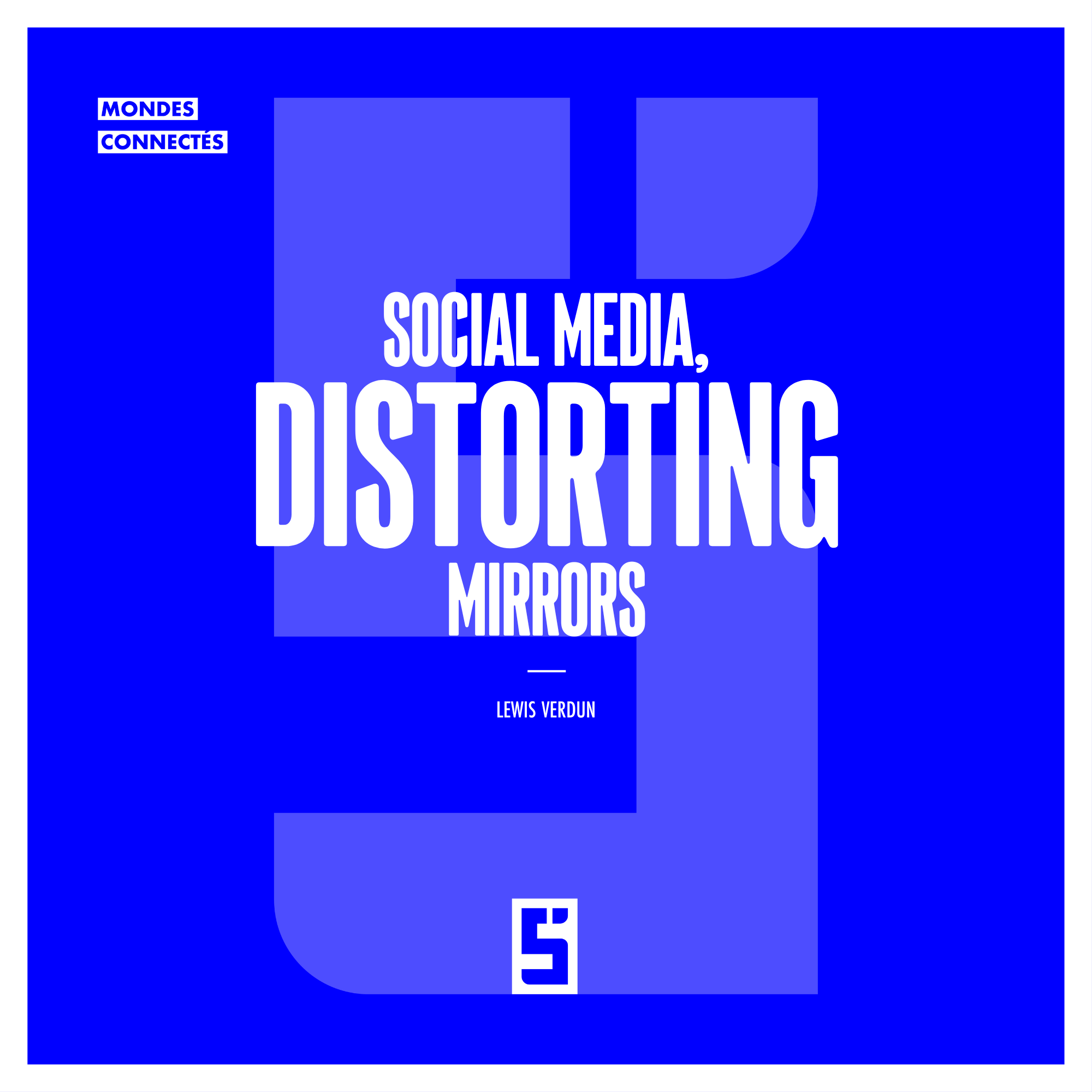
 In the era of endless scrolling, beauty filters, and viral videos, our lives often unfold through the lens of our screens. But what do these perfect images really reflect? Are they faithful representations of the world, or carefully constructed illusions? Inspired by Social Media: Distorting Mirrors by Léwis Verdun, this article explores a topic that is both vital and urgent: how social media influences our perception of reality.
Without revealing the content of the book, we’ll examine the subtle yet powerful mechanisms through which platforms shape our thoughts, emotions, and behaviors. Between collective illusion and algorithmic truth, it's more crucial than ever to sharpen our critical thinking and redefine our digital relationship.
Social media: a reality reshaped with every scroll
Social media no longer simply relays reality—it reshapes it, filters it, and scripts it. At every moment, users are exposed to an algorithmic reality—a personalized version of the world, curated by invisible calculations based on clicks, assumed preferences, or previous interactions.
This phenomenon, known as the filter bubble, creates an illusion of consensus. By consistently showing content that confirms our views or triggers emotional reactions, our worldview becomes polarized. This mechanism fuels radicalization, reinforces cognitive bias, and limits our ability to see nuance.
What we see online is not a mirror of the world—it’s a projection optimized to capture our attention. A distorting mirror, quite literally.
When image becomes the norm: impacts on self-esteem and the body
Instagram, TikTok, and Snapchat promote unattainable beauty standards. Smoothing filters, AI-sculpted bodies, and perfectly staged content contribute to a growing gap between the lived body and the perceived body.
Teenagers and young adults are especially vulnerable to these unrealistic norms. A study by the Royal Society for Public Health in the UK found a strong correlation between excessive social media use and increased anxiety, depression, and eating disorders among youth.
This isn’t just a personal issue. These skewed representations of the body foster a culture of constant performance, where appearance becomes a measure of worth. The feeling of never being “good enough” is perpetuated by endless toxic comparisons.
Behind these idealized images lies a much darker psychological reality, where the image becomes a form of tyranny.
Between truth and manipulation: the dangers of deepfakes and disinformation
With the rise of deepfakes—hyperrealistic AI-generated videos—the line between truth and fiction is increasingly blurred. Social media platforms are now fertile ground for visual disinformation, with serious consequences for democracy, public health, and social cohesion.
Elections, health crises, geopolitical conflicts are now regularly accompanied by waves of visual fake news, capable of massively influencing public opinion. In 2024, several organizations, including the WHO and the European Union, implemented new regulations to combat these risks and protect vulnerable groups, particularly minors.
But the response cannot be solely legal or technological. It must also be educational. Understanding how digital content is created and disseminated is now a core civic skill.
Taking back control: toward a more conscious digital culture
In response to these challenges, counter-movements are emerging. Non-profits, educators, psychologists, and everyday users are promoting a more mindful and critical use of social media.
Here are a few practical steps to reclaim your digital experience:
Limit screen time: Use app timers or tools like Forest or Freedom to reduce dependence
Diversify your information sources: Go beyond personalized feeds and seek out opposing viewpoints
Turn off non-essential notifications: Avoid being ruled by constant algorithmic prompts
Educate yourself about algorithmic bias: Through articles, videos, or digital literacy programs
Practice regular disconnection: Rediscover screen-free moments to reconnect with yourself and others
These simple habits help us become active participants—not passive consumers—of our digital lives.
Social media: tool of control or liberation?
This is the core question Léwis Verdun explores in Social Media: Distorting Mirrors. Beyond the very real dangers, the book also highlights the emancipatory potential of these platforms.
Online mobilizations, digital solidarity, popular education, the amplification of marginalized voices—social networks can be powerful tools for social transformation when used with clarity and intention. The author strongly advocates for platform transparency, ambitious regulation, and shared responsibility among users, corporations, and governments.
This concise yet rich book is an excellent entry point for anyone seeking to understand the complex stakes of our connected world. It presents a well-balanced, informed, and engaged perspective—steering clear of both alarmism and blind optimism.
Discover Social Media: Distorting Mirrors by Léwis Verdun now on FIVE EDITIONS!