


 Français
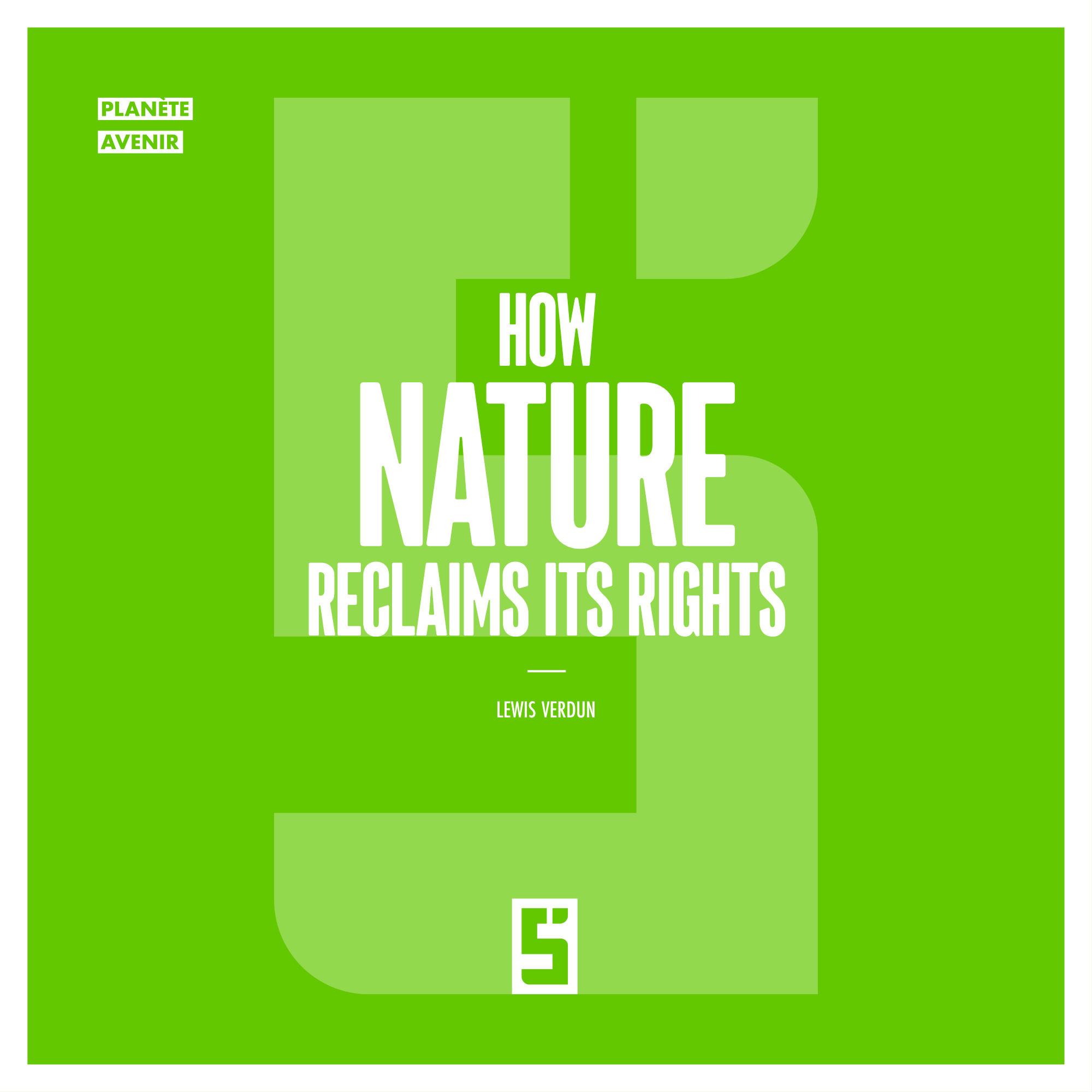
 Floods, heatwaves, biodiversity collapse, infertile soils… For decades, nature has been warning us that it’s reaching its limits. Yet, a quieter but equally powerful phenomenon is unfolding: nature is coming back — sometimes on its own, sometimes aided by ambitious restoration projects. In How Nature Reclaims Its Rights, published in the NEW HORIZONS collection by Five Minutes, Léwis Verdun deciphers this silent but vital return of the living world.
This book is not another alarm bell. It’s a documented roadmap of concrete solutions, grounded in field data, forward-thinking legal actions, and impactful real-world examples. Through themes like rewilding, nature’s legal rights, and Indigenous governance, Verdun shows us that ecological restoration isn’t a dream — it’s already happening, and it brings tangible economic, social, and cultural benefits.
In this article, we broaden the discussion to a connected topic: how can ecological regeneration become a cornerstone of our urban, economic, and political models? This transformation affects not just environmentalists, but all citizens, decision-makers, businesses, and local governments.
From Concrete to Urban Forests: Toward Living Infrastructures
Faced with rising heat and urban flooding, many cities are undergoing a deep transformation. The unchecked concreting of the 20th century is being reconsidered in favor of nature-based solutions. Far from symbolic, these choices reflect a shift toward more integrated and adaptive urban planning.
How Nature Reclaims Its Rights illustrates this with tangible examples: planting urban forests, creating rain gardens to absorb floodwaters, removing concrete from riverbanks, or transforming abandoned highways into ecological corridors.
These projects increase urban resilience, reduce heat islands, improve public health, and strengthen social bonds. But they also require a paradigm shift: seeing nature not as a decorative extra, but as a foundational ally in public policy.
This approach aligns with regenerative urbanism and biophilic design, both of which aim to reconnect humans with their environment while restoring local ecosystems.
The Return of the Wild: Rewilding and Coexistence
One of the book’s central insights is that nature does not need saving — it needs peace and, at times, intelligent support.
Species once thought extinct are making a comeback: sturgeon, beavers, pine voles… These biological revivals don’t happen by chance but through strategic rewilding programs that reintroduce key species, restore food chains, and bring complexity back to degraded ecosystems.
In some areas, entire rivers are being returned to their natural flow after decades of human engineering. Elsewhere, mangroves are being replanted to protect coastlines and support juvenile fish populations. In mountainous regions, forests regenerate naturally once intensive grazing declines.
Such initiatives challenge us to reconsider the human role in the web of life. Coexisting with wolves or beavers is not just a matter of biology — it’s also about culture, law, and local economies. Social acceptance is just as critical as ecological science.
When Ecosystems Gain Legal Personhood
The book also explores a groundbreaking legal evolution: recognizing the rights of nature.
Rivers like the Whanganui (New Zealand), Río Atrato (Colombia), and sacred mountains in India have been granted legal personhood, with rights to exist, regenerate, and be protected. While still rare in Europe, this development fundamentally shifts how we relate to the natural world.
In this framework, it’s not just humans who can sue — natural entities have legal guardians, often Indigenous leaders or environmental NGOs.
This shift paves the way for a new kind of ecological jurisprudence, where nature is no longer treated as a resource, but as a subject with inherent value and vital societal functions. The goal is no longer to “manage biodiversity” but to recognize its agency and its indispensable role in our survival.
Restoring Nature: An Investment in Our Future
To those who see ecological restoration as a luxury for wealthy nations, How Nature Reclaims Its Rights offers data-backed counterarguments: the benefits often outweigh the costs, especially over the medium to long term.
Here are some of the measurable benefits highlighted in the book:
Economic: reduced disaster recovery costs, increased ecotourism appeal, revived local economies (fishing, craft industries, sustainable farming)
Health: improved air quality, reduced stress and chronic illness in urban areas
Social and educational: new green jobs, youth engagement through local projects, elevation of Indigenous knowledge systems
Climate-related: carbon sequestration, temperature regulation, water cycle preservation
It’s time to move beyond short-term thinking and adopt a systemic, intergenerational approach. Restoring nature also means restoring our collective capacity to plan, collaborate, and thrive.
This shift is already underway — but it can accelerate if we learn from real examples, share best practices, and embrace diverse cultural approaches.
In this sense, Léwis Verdun’s book is more than an environmental essay: it is a rational, inspiring, and evidence-based call to action.
Discover How Nature Reclaims Its Rights now on Five Minutes!