


 Français
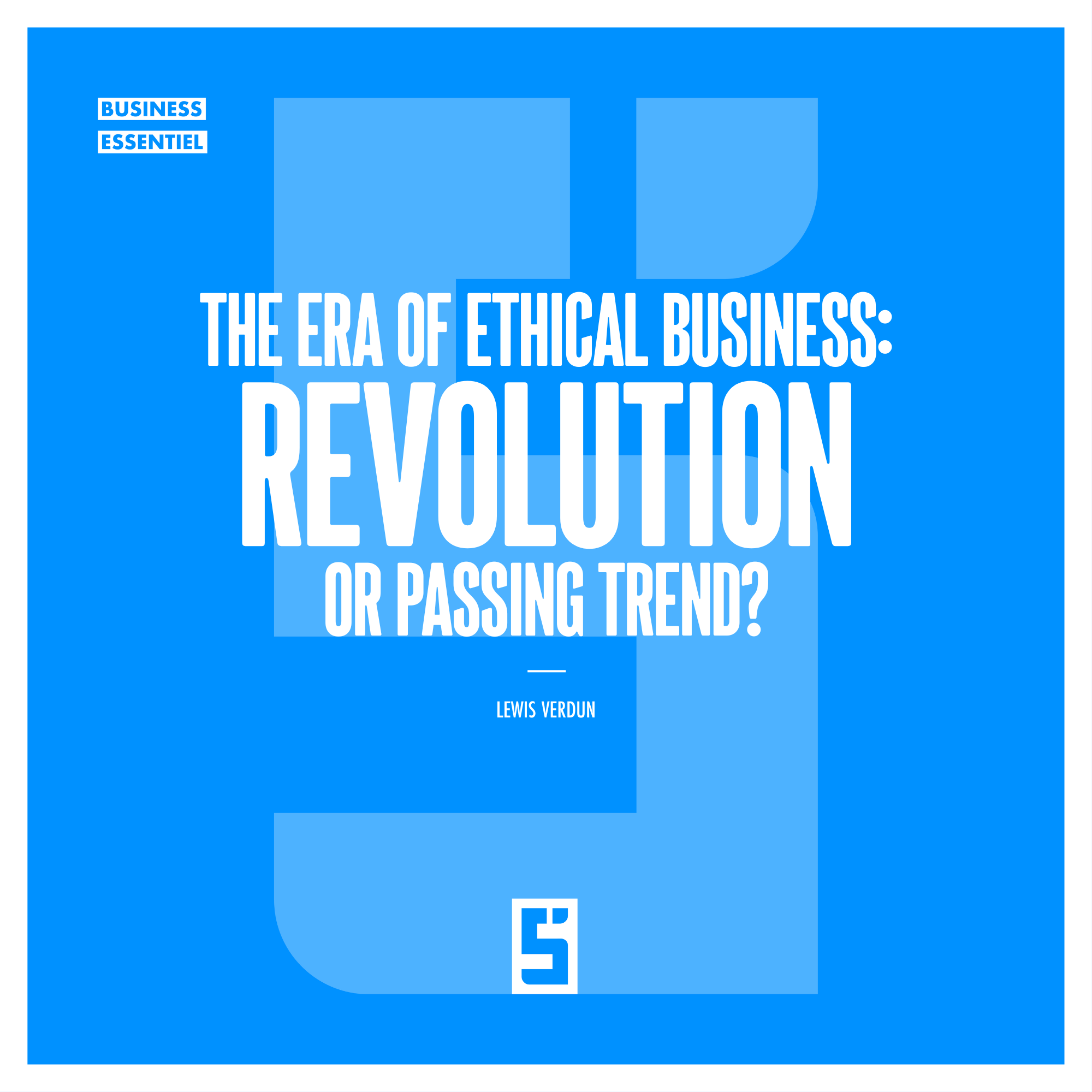
 As consumers demand more transparency and regulators tighten requirements, business ethics is no longer a peripheral topic. It has become a strategic—and sometimes vital—issue. The book The Era of Ethical Business: Revolution or Passing Trend? by Léwis Verdun, published by Five Minutes, offers a deep analysis of this transformation. Without revealing the book's content, this article explores a related but essential question: how can ethics become a competitive advantage for companies in the age of sustainability and digital transformation?
Rather than opposing ethics and performance, more and more leaders are finding ways to align them. But is this evolution sincere or simply opportunistic? And above all, what concrete levers allow companies to integrate ethics without compromising competitiveness?
We’ll examine this issue through the lenses of regulation, social pressure, and technological innovation.
The Regulatory Wake-Up Call: Constraint or Catalyst?
Since 2024, the European regulatory landscape has become significantly more stringent. Between the CSRD (Corporate Sustainability Reporting Directive), CSDDD (Corporate Sustainability Due Diligence Directive), and the directive on green claims, companies are now required to justify their ethical commitments—or face penalties.
This shift has a dual impact. On one hand, it imposes significant compliance costs, especially on SMEs that may be less equipped to handle such complexity. On the other, it structures the market and reinforces the credibility of committed players.
A recent Deloitte study shows that 68% of European companies view ESG compliance as a competitive differentiator. By aligning with these new standards, they meet investor and consumer expectations while preparing for increasingly selective markets.
Thus, far from being a constraint, the regulatory framework can become a catalyst for innovation—provided it is well understood and integrated into an overarching strategy.
Social Pressure: Consumers Drive the Transformation
The myth of the passive consumer is long gone. New generations—especially Millennials and Gen Z—expect brands to embody strong values. According to a 2025 EY survey, 78% of European consumers say they are willing to pay more for sustainable and ethical products.
This paradigm shift creates a domino effect. Companies that don’t step up quickly lose credibility, and accusations of greenwashing can severely damage their reputation.
But authenticity is now key. Promises must be followed by concrete actions: sustainable materials, fair working conditions, inclusion, transparency across the supply chain. Social media amplifies every misstep and rewards brands that stay consistent.
In this context, certifications, third-party audits, and traceability platforms are becoming essential tools for building public trust.
Ethical Tech: Artificial Intelligence and Responsibility
Ethics isn’t limited to environmental or social concerns—it also applies to technology. With the rise of responsible artificial intelligence, companies must now ensure algorithmic fairness, data protection, and the absence of discriminatory bias.
Algorithmic ethics is particularly sensitive in sectors like finance, healthcare, and HR. A poorly configured AI system can result in systemic discrimination—or even legal liability.
Fortunately, tools are emerging to assess the social impact of technologies, develop explainable AI, and involve ethics committees in design processes. The trend is toward technological governance—an emerging field that combines innovation, law, and accountability.
Companies that address these issues early in system development gain a long-term competitive edge. They build trust and attract talent, clients, and investors increasingly concerned about digital ethics.
How to Effectively Integrate Ethics into a Business Model
While ethics has become essential, implementing it remains a challenge. Here are some practical strategies for companies looking to align performance with responsibility:
1. Adopt transparent governance
Integrate ESG indicators into executive committees
Make non-financial results public and verifiable
Establish an ethics committee or Chief Ethics Officer
2. Audit your value chain
Identify risk areas (forced labor, pollution, corruption)
Work with certified suppliers
Implement traceability mechanisms
3. Build ethical technology
Use representative, bias-free datasets
Involve stakeholders in AI design
Conduct technology impact audits
4. Train and raise awareness internally
Offer regular training on business ethics
Include ethics in performance evaluations
Encourage a culture of whistleblowing and feedback
5. Co-create with stakeholders
Engage with NGOs, consumers, and employees
Set up citizen panels or public consultations
Explore new models like B Corp or benefit corporations
At a time when greenwashing risks are increasing and political polarization around ESG issues is intensifying, adopting a structured and strategic approach is essential. Ethics should not be a marketing layer—it must become an organizational backbone, able to withstand crises and scrutiny.
This is precisely the line of thought developed by Léwis Verdun in his book The Era of Ethical Business: Revolution or Passing Trend? Through concrete examples, up-to-date data, and sharp analysis, he guides leaders toward a deep understanding of today’s business shifts.
Discover The Era of Ethical Business: Revolution or Passing Trend? now on FIVE MINUTES and learn how to turn ethics into a growth driver.