


 Français
 Rituals are not relics frozen in the past — they remain a powerful lens through which we can understand our collective behavior and social structures. In an age seemingly ruled by science and technology, why do the symbolic and the sacred still persist? And how do long-forgotten practices from ancient times continue to shape the way we live, believe, and come together?
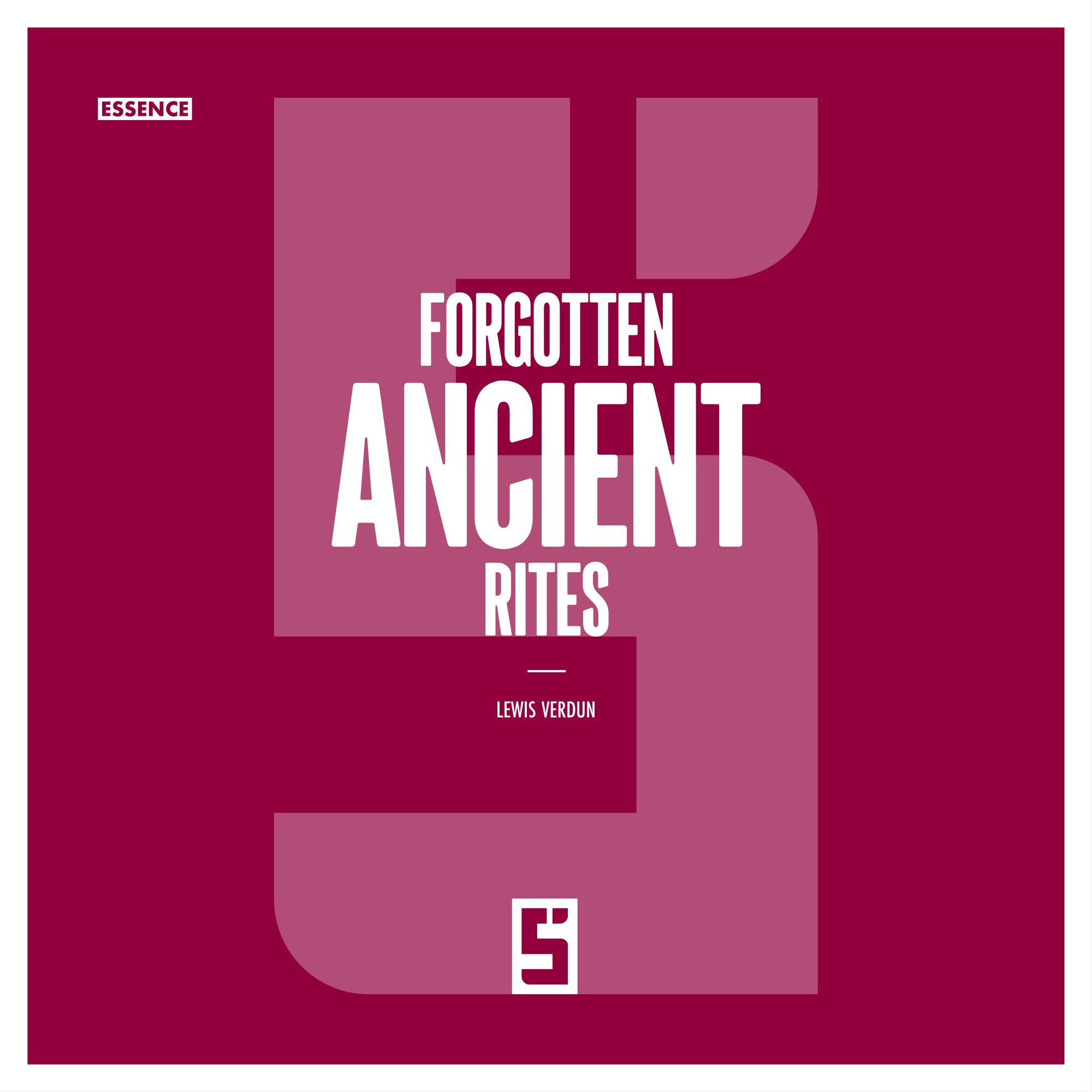
In his work Forgotten Ancient Rites, published by Five Minutes, Léwis Verdun offers a fascinating rediscovery of millennia-old traditions. Drawing on the most recent archaeological discoveries (2024–2025), the book invites us to recognize the universal importance of ritual in human history. This leads us to a central question: Have rituals truly disappeared, or have they simply transformed?
Humanity's Enduring Need for Rituals
From the beginning of time, rituals have marked major milestones in human life — birth, death, initiation, healing, alliance. They structure societies, transmit values, and provide a framework for facing the unknown.
Recent excavations have uncovered funerary banquets in the Kerma culture (present-day Sudan), where the living symbolically shared a meal with the deceased. Far from being anecdotal, these rituals reflect social organization, a worldview, and a deeply symbolic way of managing grief.
Even today, though often secularized, our modern practices — weddings, birthdays, civil ceremonies — follow the same structures as these ancient rituals. This highlights a profound truth: rituals are cultural responses to universal existential needs.
The Power of Symbolism in Contemporary Society
In the digital age, one might assume rationality has pushed rituals aside. Yet rituals have simply migrated to new domains.
In stadiums, concerts, and even on social media, ritual behaviors are everywhere. We see repeated gestures, chants, dress codes, and collective staging. Just like ancient sacrifices or rites of passage, these practices foster belonging, connection, and sometimes even transcendence.
There is a striking parallel between certain practices described in Forgotten Ancient Rites — such as ritual “devil’s money” offerings in the Netherlands — and our modern economic rituals: symbolic donations, charitable event exchanges, or even the curious rites of the financial world.
Therapeutic Rituals and the Modern Quest for Meaning
One of the most powerful insights in the anthropology of ritual is its therapeutic function. Verdun’s book delves into this by exploring examples like hidden plant offerings beneath a Mesoamerican ball court or horse sacrifices in the Ural steppes — acts that go beyond the practical and operate on symbolic and spiritual levels.
Today, the resurgence of so-called “alternative” or “spiritual” practices — talking circles, shamanic retreats, neo-pagan rites — reflects the same need for symbolic healing. In response to individualism and a loss of shared meaning, rituals offer space where individuals can reconnect with others, with nature, or with themselves.
These practices are not mere trends. They address a growing search for meaning in modern societies — a continuity that Verdun’s book illuminates masterfully.
What Ancient Rites Teach Us About the Future
Studying forgotten rites helps us better understand our relationship to change, innovation, and tradition. The book shows how some rituals were adapted or syncretized, while others were completely abandoned. This mirrors today’s cultural shifts — evolving religions, hybrid traditions, revived ancient practices.
Through examples like Stonehenge — whose exact functions still elude us — or Australian rituals transmitted for 12,000 years, Verdun invites us to rethink collective memory. What if humanity’s future depended on its ability to remember?
These ancient practices are not just archaeological remains. They offer us a mirror, a framework for understanding the present. Far from nostalgia, ritual may well be a resource for imagining the future.
Practical Tools to Understand and Analyze Rituals
Here are some concrete ways to integrate ritual analysis into your reading, research, or daily life:
5 Keys to Decode a Ritual:
Social Function: What role does it play in the group?
Symbolism: What objects, gestures, or words are used?
Temporality: Is it tied to a specific time (season, life cycle)?
Participants: Who takes part, who organizes it?
Transformation: What change does it aim to bring (status, awareness, perception)?
Examples of Ritual Analysis at Home:
Observe a local ritual (religious, family, sporting) and analyze its structure.
Compare two similar rites from different cultures.
Read a novel or watch a film through a ritualistic lens.
Forgotten Ancient Rites is much more than a popular science book — it's a bridge between past worlds and our modern era, between engraved stone and algorithms, between sacred offerings and social networks. By revisiting long-buried traditions, Léwis Verdun offers a profound reflection on our need for the sacred and our search for meaning.
Discover Forgotten Ancient Rites now on FIVE MINUTES!