


 Français
 Each generation experiences its own revolutions. The one we’re living through today, driven by technological transformations, societal upheavals, and personal aspirations, has brought about a global phenomenon: the near-universal desire to become an entrepreneur. Once reserved for a privileged few, entrepreneurship is now considered by millions as a life choice, a quest for meaning—even a necessity.
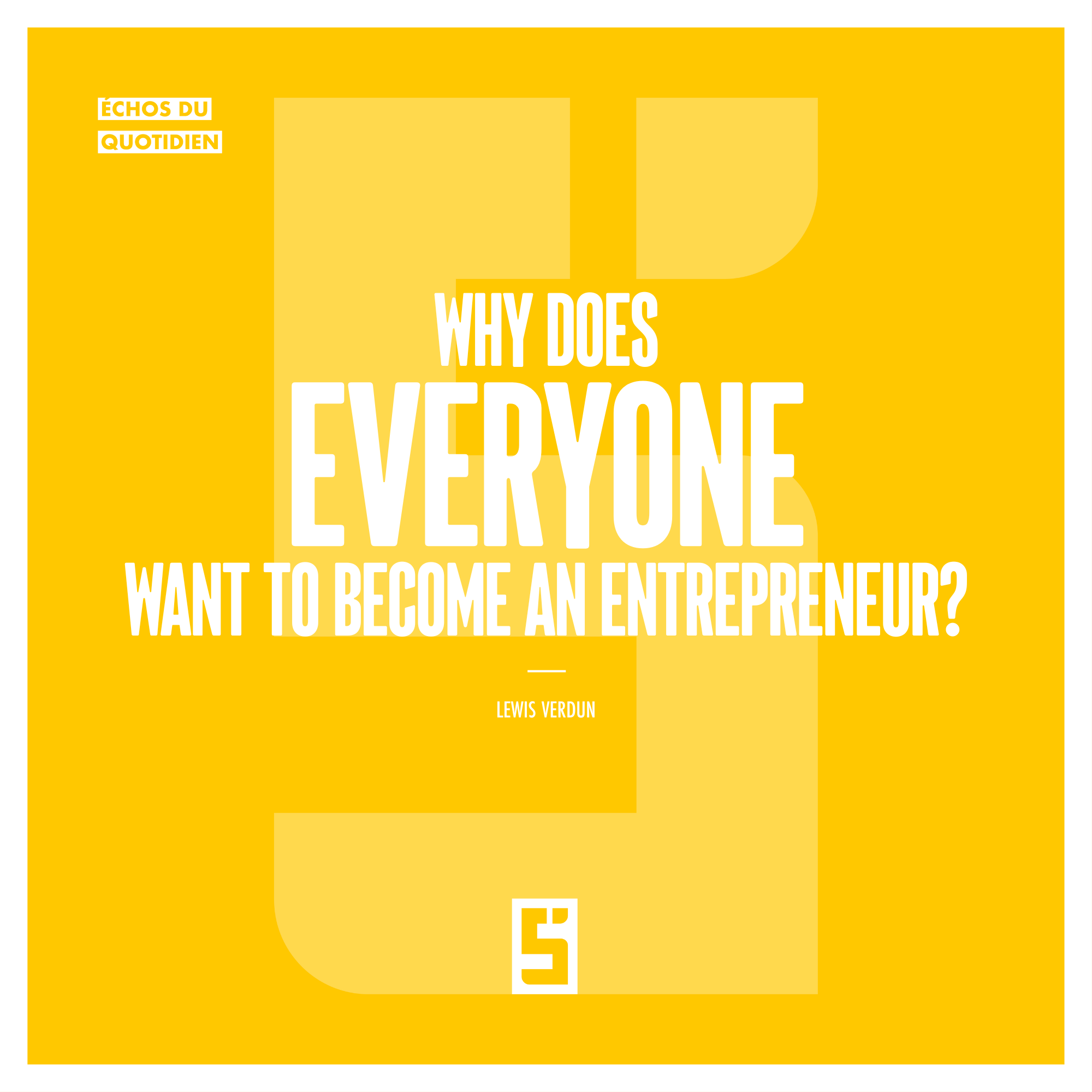
But is this drive to start a business just a passing trend, or does it reflect a deeper shift in how we view work, success, and freedom? Inspired by the reflections in the book Why Does Everyone Want to Become an Entrepreneur? by Léwis Verdun, this article explores the underlying forces behind the unprecedented rise in entrepreneurship, while analyzing the social, technological, and psychological challenges it involves.
The End of Traditional Employment: Evolution or Breakdown?
The classic career model—based on job security, fixed hours, and hierarchical structures—is being shaken by a series of disruptions: the pandemic, automation, economic instability, and the pursuit of work-life balance. As a result, more and more workers are questioning the relevance of this model in a world where flexibility and autonomy have become key values.
This shift reflects not only dissatisfaction with salaried work but also a fundamental need: to take control of one’s time, projects, and life path. Entrepreneurship is increasingly viewed as a means of reclaiming personal agency.
Technology’s Impact: A Universal Lever
The rise of digital tools, generative AI, and freelance platforms has dramatically democratized access to entrepreneurship. No longer do you need expensive office space or large startup capital—just a computer, internet access, and a clear idea can be enough.
Today, a young woman in West Africa can sell handmade goods to European customers. A developer in India can freelance for Silicon Valley startups.
This phenomenon expands access for underrepresented groups—women, youth, ethnic minorities—and fosters social innovation across the globe.
A Quest for Meaning, Not Just Money
Entrepreneurship is no longer only about profit or financial success. For most new founders, it’s about embodying personal values: sustainability, inclusion, ethics, education, well-being.
Nearly 70% of new entrepreneurs say their primary reason for starting a business is the desire to make a positive impact—far above money-driven motives.
Entrepreneurship has become a way to act, to make a difference.
The Hidden Side of the Entrepreneurial Dream
Despite its appealing image, entrepreneurship is a difficult journey. From funding struggles to isolation, financial insecurity, and mental health pressures—the reality can be harsher than the inspiring stories suggest.
Almost half of all new businesses fail within the first three years, often due to psychological obstacles: chronic stress, mental fatigue, and social pressure.
To succeed, a realistic, informed, and well-supported approach is essential. The message is clear: become an entrepreneur—but do it responsibly.
Are You Ready to Become an Entrepreneur?
Here are some questions to ask yourself before taking the leap:
Am I driven by a real idea or just a desire for independence?
Am I ready to face financial instability?
Have I identified a market or unmet need?
Do I have a support system or advisors?
Am I aware of the personal and emotional costs?
In a world in flux, where people want to align their work with their values, entrepreneurship is both a practical and liberating option.
The book Why Does Everyone Want to Become an Entrepreneur? by Léwis Verdun dives deep into this global trend. Supported by recent data and sharp analysis, it offers essential insights for anyone curious about modern entrepreneurship.
Discover Why Does Everyone Want to Become an Entrepreneur? now on FIVE MINUTES!