


 Français
 The climate debate is no longer about sounding the alarm—it is about taking action. Scientific reports continue to accumulate, heat records are broken year after year, and the so-called carbon budget is shrinking rapidly. According to researchers behind the Global Carbon Budget, we have less than six years left to keep global warming below 1.5°C if emissions continue at their current pace.
In the face of this urgency, one essential question arises: can we truly repair the climate?
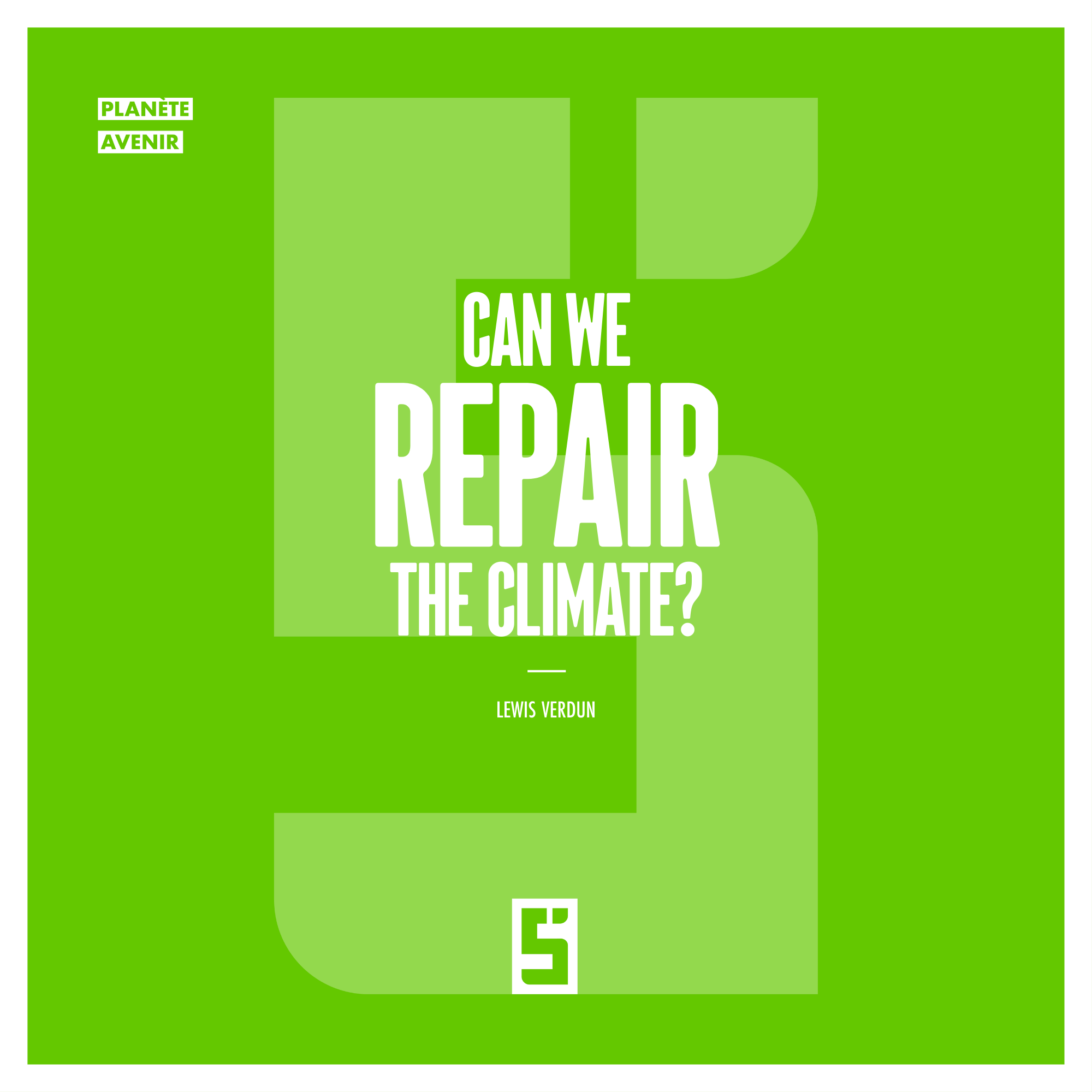
The mini-book Can We Repair the Climate? by Léwis Verdun provides clear, well-documented, and action-oriented answers. Without dramatizing or downplaying the stakes, it outlines a realistic roadmap to accelerate the energy transition and reshape our climate future.
Beyond the diagnosis, the book invites us to explore a broader theme: how can we transform our development model to reconcile prosperity, equity, and climate stability?
The Carbon Budget: A Scientific Constraint Turned Political Reality
The carbon budget refers to the maximum amount of CO₂ humanity can still emit to limit global warming to 1.5°C or 2°C.
Rather than simply reducing emissions, we must now manage a limited carbon capital.
Recent data (2024–2025) show that the world still emits around 40 billion tons of CO₂ annually. At this rate, the remaining margin is extremely narrow. Yet transitions are already underway:
585 GW of renewable capacity are added globally each year.
Investments in solar and wind exceed those in fossil fuels.
New climate policies are emerging worldwide.
Tripling renewable energy capacity by 2030 is considered a decisive lever for staying aligned with the Paris Agreement.
Energy Transition: Electrify, Decarbonize, Innovate
The energy transition rests on three pillars:
Massive electrification of uses.
Decarbonization of heavy industry.
Energy efficiency and responsible consumption.
Solutions include green hydrogen, carbon capture technologies, and low-carbon materials. Direct air capture may also play a complementary role in removing residual emissions.
However, technology alone is not enough. Ecosystem restoration is equally essential.
Nature and Climate: Restoring Ecosystems
Forests, mangroves, soils, and oceans absorb significant amounts of CO₂ but are under threat.
Examples of progress include:
Mangrove restoration projects.
Agroecology initiatives.
Community-based reforestation programs.
Nature-based solutions complement technological innovation.
Reducing Methane: A Fast Lever
Methane has a much stronger warming effect than CO₂ over 20 years. Main sources include agriculture, fossil fuel leaks, and waste.
Actions include:
Improving waste systems.
Reducing gas leaks.
Adapting agricultural practices.
Encouraging plant-based diets.
These measures are cost-effective and produce rapid climate benefits.
Climate Justice and Financing
Countries least responsible for emissions are often the most affected. Repairing the climate requires international solidarity and fair financing mechanisms.
Without equitable funding, technical solutions will not be sufficient.
Acting at Every Level
Governments, businesses, and citizens all have roles to play:
Implementing carbon pricing.
Supporting renewable energy.
Decarbonizing supply chains.
Reducing personal energy consumption.
Practical Actions to Repair the Climate
High-impact actions include:
Improving energy efficiency at home.
Choosing sustainable transport.
Supporting ecosystem restoration.
Conducting carbon footprint assessments.
Investing responsibly.
The question “can we repair the climate?” is no longer utopian. Solutions exist, and transitions have begun. What is needed now is scale and speed.
In Can We Repair the Climate?, Léwis Verdun demonstrates that repairing the climate is possible if collective action begins immediately.
Discover Can We Repair the Climate? now on Five Minutes.