


 Français
 In the era of constant digital connectivity, the phenomenon of online communities has become an invisible yet powerful driving force in our societies. From specialized forums to private social media groups, from collaborative platforms to global activist movements, these digital spaces are reshaping the way we work, learn, consume, and engage.
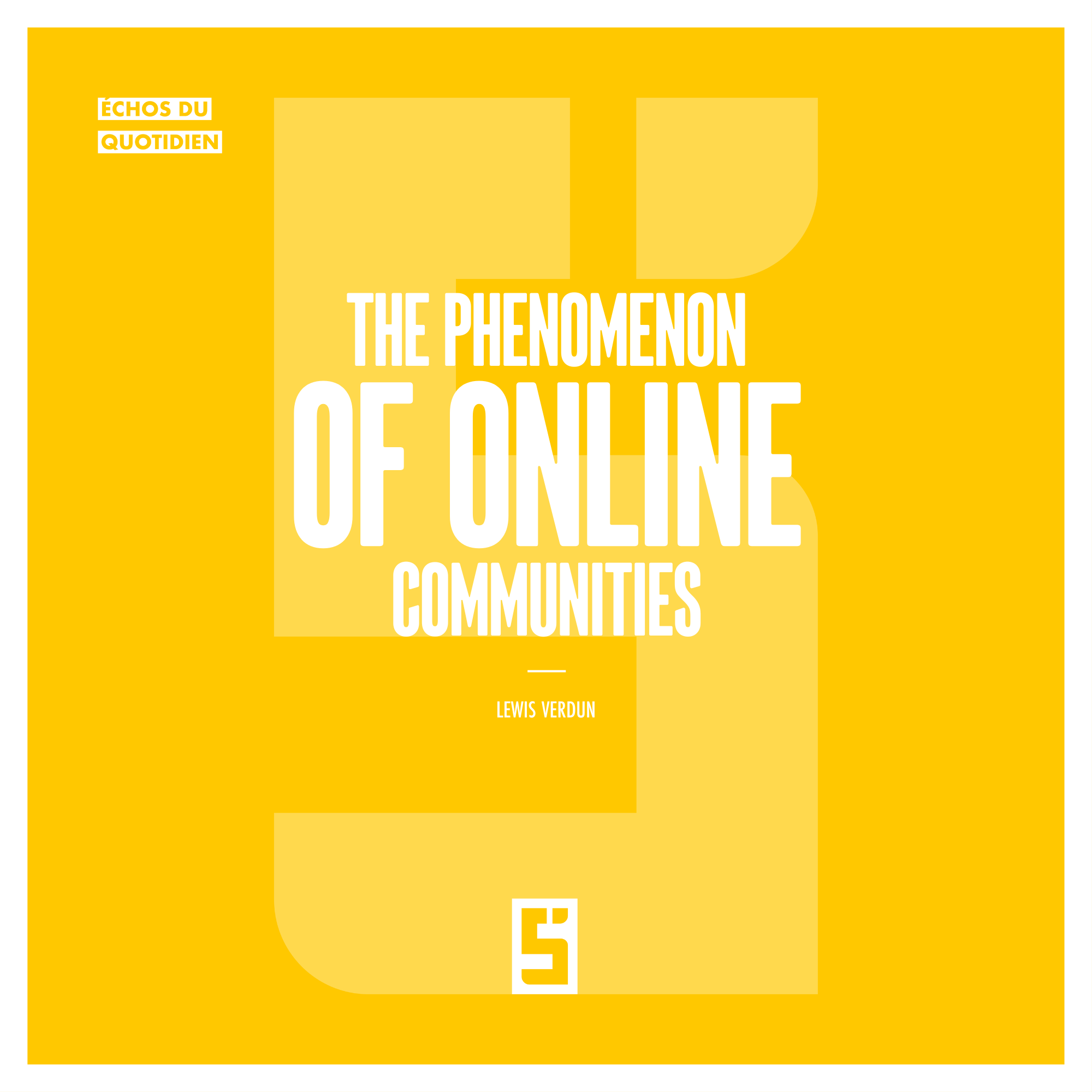
The mini-book The Phenomenon of Online Communities by Léwis Verdun, published in the ÉCHOS DU QUOTIDIEN collection (Five Minutes), offers a critical and accessible overview of this transformation. Drawing on recent studies (2024–2025), it sheds light on the dynamics of collaboration, innovation, and mobilization, while also addressing the risks of polarization, cyberhate, and digital addiction.
Beyond the analysis presented in the book, let us explore an essential related theme: how to build responsible and inclusive digital communities in a hyperconnected world.
Digital Communities: A New Pillar of the Connected Society
Digital communities are no longer simple informal gatherings. They now represent structured ecosystems where knowledge, norms, solidarity, and professional opportunities are created.
In the workplace, communities of practice stimulate collaborative innovation. Open-source developers, designers, teachers, and entrepreneurs exchange advice and feedback in real time. Hybrid work, accelerated by post-pandemic transformations, relies heavily on these networks to maintain cohesion and creativity.
In education, social learning continues to expand. Support platforms, virtual study groups, and specialized forums provide broader access to knowledge. Online interactions play an increasing role in continuing education and self-directed learning.
On the civic level, social media platforms have become catalysts for engagement. Movements such as #YesAllWomen or #1000BlackGirlBooks demonstrate how a digital initiative can mobilize on a large scale, transform public debates, and influence policies.
The phenomenon of online communities therefore goes beyond the simple use of social media: it contributes to a profound redefinition of social bonds.
Collaborative Innovation and Collective Intelligence
One of the most fascinating aspects of digital communities lies in their ability to produce collective intelligence.
Collaborative innovation is based on three pillars:
Diversity of profiles and expertise
Accessibility of digital tools
Speed of exchanges
Open-source communities perfectly illustrate this dynamic. Thousands of contributors around the world collectively improve software, detect vulnerabilities, and imagine new features.
Within companies, internal platforms also foster the emergence of new ideas. Employees can propose solutions, vote on projects, and collaborate beyond traditional hierarchies.
This horizontal model transforms organizations. It encourages transparency, agility, and co-construction. However, it also requires clear governance in order to prevent misinformation, conflicts, or the domination of certain voices.
Léwis Verdun’s book highlights this tension between freedom of expression and collective responsibility, a central issue for the future of digital communities.
The Risks: Polarization, Cyberhate, and Digital Addiction
While online communities offer unprecedented opportunities, they also involve major risks.
Polarization is one of the most studied phenomena. Social media algorithms often favor content that generates strong emotional reactions, which can reinforce informational bubbles. Individuals are then primarily exposed to opinions similar to their own.
Cyberhate and online harassment constitute another challenge. Behind relative anonymity, toxic behaviors multiply, particularly affecting women, minorities, and public figures.
Finally, digital addiction is becoming a public health issue. Excessive platform use can lead to sleep disorders, reduced concentration, and anxiety. Initiatives are emerging to encourage more conscious usage, such as de-influencing, which aims to question the overconsumption encouraged by certain content creators.
The phenomenon of online communities therefore requires ethical reflection and appropriate regulatory mechanisms.
How to Build Responsible and Inclusive Communities
In the face of these challenges, it becomes essential to develop practices that promote healthier digital communities.
Here are several key principles:
Encourage active and transparent moderation
Establish clear participation rules
Value diversity of voices and perspectives
Train members in critical thinking and source verification
Promote digital breaks to prevent addiction
Online health communities provide an inspiring example. When properly supervised, they support participants’ well-being, encourage experience sharing, and reduce isolation.
Building a responsible community does not depend solely on platforms. Every internet user plays a role: sharing verified content, engaging respectfully, reporting abuse, and practicing balanced digital consumption.
In a hyperconnected world, the phenomenon of online communities acts as a mirror of our societies. It reveals our ability to cooperate beyond borders, to learn together, and to defend shared causes. But it also highlights our vulnerabilities: polarization, dependency, and digital conflicts.
The book The Phenomenon of Online Communities by Léwis Verdun offers a critical, documented, and accessible perspective on these major transformations. In just ten minutes of reading, it invites everyone to become aware of their role as an internet user and to contribute to a more ethical and more human internet.
Discover The Phenomenon of Online Communities now on Five Minutes.