


 Français
 Seeing sequences such as 11:11 on a clock, 333 on a license plate, or 777 on a receipt is a surprisingly common experience. Many people interpret these moments as signs, messages, or meaningful coincidences. On social media, these so-called “angel numbers” have become a true cultural phenomenon, sparking curiosity and discussion.
But why does our attention suddenly focus on these numerical patterns? Are they simply coincidences, or do they carry symbolic meaning? Between cognitive psychology, spiritual traditions, and contemporary numerology, repetitive numbers occupy a unique place in the way we interpret the world.
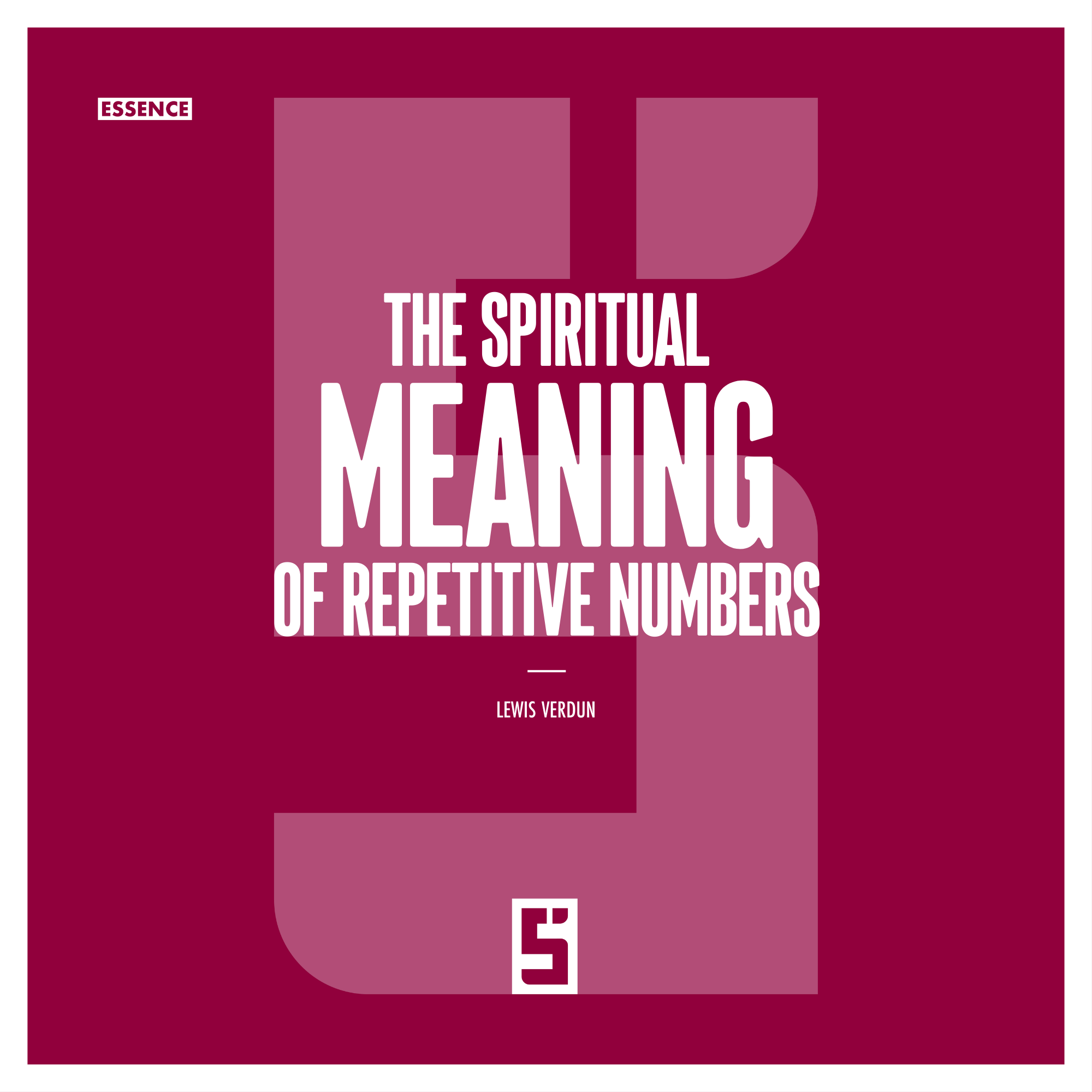
The book The Spiritual Meaning of Repetitive Numbers by Léwis Verdun explores precisely this meeting point between science, culture, and spirituality. Before discovering the book, let’s dive into the fascinating universe of numbers that seem to appear everywhere.
Why Does Our Brain Notice Repetitive Numbers?
The first key to understanding this phenomenon lies in the human brain. Our minds are naturally programmed to detect patterns in our environment. This ability is essential: it helps us recognize faces, anticipate dangers, and understand structures.
Two cognitive mechanisms play a central role.
The frequency illusion (Baader–Meinhof effect)
When something catches our attention for the first time, we suddenly feel as if we see it everywhere. In reality, it was already present around us; our brain has simply started noticing it.
Apophenia
This term refers to the human tendency to perceive meaningful connections or patterns in random events. It is the same mechanism that makes us see shapes in clouds or faces in everyday objects.
Thus, when someone notices a sequence like 1111 or 222 for the first time, their brain becomes more attentive to these patterns. As a result, they seem to appear more frequently.
However, reducing these experiences entirely to a cognitive bias would ignore an important reality: numbers also hold deep symbolic meaning throughout human history.
Sacred Numbers Across Cultures
Long before the rise of social media and “angel numbers,” civilizations already attributed special meanings to certain numbers.
Religious and spiritual traditions around the world demonstrate this universal fascination.
In the biblical tradition, for example, the number 40 appears repeatedly:
40 days of the flood
40 years wandering in the desert
40 days of fasting
In Asian spiritual traditions, symbolic numbers also play an important role. The number 108, for instance, corresponds to the beads of a mala used in Buddhist and Hindu meditation practices.
In Chinese culture, certain numbers are considered particularly auspicious:
8 is associated with prosperity
9 symbolizes longevity and power
Islamic tradition also attributes symbolic significance to certain numbers, including 786, which corresponds to the numerical value of the sacred phrase “Bismillah” in the abjad system.
Among the Yoruba traditions of West Africa, some deities (Orishas) are also associated with specific numbers within rituals.
These examples show that numbers have long functioned as a symbolic language. They help structure myths, rituals, and collective beliefs.
The Modern Phenomenon of Angel Numbers
In recent years, a new phenomenon has become increasingly popular: angel numbers.
On Instagram, TikTok, and YouTube, many creators explain the meaning of sequences such as:
111: manifestation and new beginnings
222: balance and alignment
333: spiritual support
555: upcoming change
777: luck or spiritual awakening
These interpretations are often inspired by modern numerology, a discipline that assigns symbolic vibrations to numbers.
The popularity of these interpretations can be explained by several factors:
a growing need for meaning in an uncertain world
the search for signs or synchronicities
the influence of online spiritual communities
the appeal of personal development practices
Repetitive numbers therefore become a kind of symbolic mirror. They invite us to reflect on what we are experiencing at the moment they appear.
However, a balanced perspective is essential. Numbers can inspire reflection, but they should not become rigid rules or absolute predictions.
Synchronicity: When Coincidences Feel Meaningful
Psychologist Carl Gustav Jung introduced the concept of synchronicity to describe certain coincidences that appear meaningful.
According to Jung, synchronicity occurs when two events without a direct causal link take on special significance for someone.
For example:
thinking about someone and receiving a message from them
noticing a specific number at the moment of an important decision
repeatedly seeing a symbol during a period of personal transformation
From this perspective, repetitive numbers can act as triggers for reflection. They capture our attention and encourage us to become more aware of what is happening in our lives.
Rather than seeing them as fixed messages, some approaches suggest asking simple questions:
What was I thinking about when I saw this number?
What situation currently occupies my mind?
Does this symbol encourage me to reflect differently?
Numbers then become tools for introspection rather than mystical commands.
How to Interpret Repetitive Numbers Without Falling Into Superstition
Adopting a balanced perspective allows us to appreciate these experiences without becoming trapped in rigid beliefs.
Here are a few practical ways to interpret these signs thoughtfully.
Observe the context
Numbers do not have a single universal meaning. Their interpretation often depends on the moment they appear and what you are experiencing.
Use numbers as prompts for reflection
Instead of seeing them as predictions, treat them as reminders to pause and reflect.
Maintain critical thinking
Our brains are extremely good at detecting patterns. Recognizing this bias helps prevent exaggerated interpretations.
Keep a synchronicity journal
Writing down moments when certain numbers appear can help you understand their emotional or symbolic impact.
Numbers as Metaphors for Understanding Life
Ultimately, the fascination with repetitive numbers reveals something deeply human: our desire to find meaning in everyday events.
Numbers become modern metaphors. They act as reference points for reflection, much like symbols in myths or dreams.
Seeing them can simply remind us to:
slow down
observe our environment
reflect on our intentions
remain open to possibilities
In this sense, numbers do not dictate our destiny. Instead, they open a door to curiosity and self-reflection.
Repetitive numbers are fascinating because they exist at the intersection of chance, perception, and symbolism. Between neuroscience, spiritual traditions, and digital culture, they perfectly illustrate how humans try to interpret the world around them.
The book The Spiritual Meaning of Repetitive Numbers by Léwis Verdun offers a deeper exploration of this phenomenon. By combining cognitive psychology, cultural history, and modern numerology, the author provides an approach that is both accessible and thought-provoking.
Discover The Spiritual Meaning of Repetitive Numbers now.