


 Français
 Entrepreneurship attracts millions of people around the world today. Yet one belief persists: you need significant capital to get started. This assumption prevents many projects from ever seeing the light of day. In reality, creating a business with limited resources is not only possible—it is often more strategic.
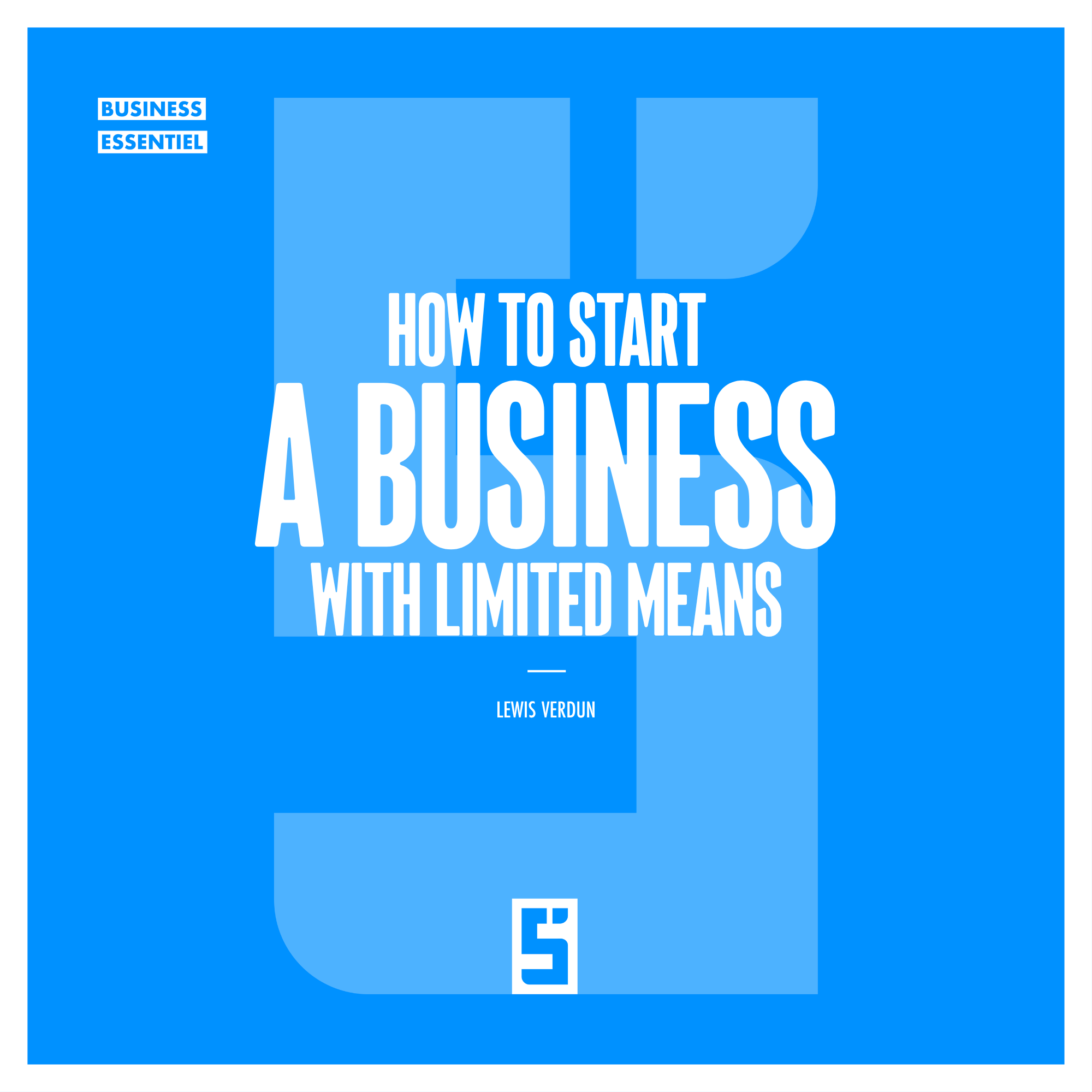
Inspired by the book How to Create a Business with Limited Resources? by Léwis Verdun, this article explores a pragmatic and modern approach to entrepreneurship. Rather than focusing on the lack of resources, it highlights the opportunities offered by an ever-evolving economic and digital environment.
Why limited resources can become a strategic advantage
Contrary to popular belief, having fewer resources can foster stronger entrepreneurial discipline. When resources are scarce, every decision becomes strategic. It pushes you to focus on what truly matters, test quickly, and avoid unnecessary expenses.
Entrepreneurs who succeed without large budgets often adopt an agile approach. They prioritize simple solutions, test their ideas in real conditions, and quickly adjust their strategy. This way of working reduces financial risk and accelerates learning.
Moreover, the rise of digital tools has completely changed the landscape. Today, it is possible to launch a website, build a brand, or sell a product with minimal investment. Free or low-cost platforms make it easier to reach a wide audience without relying on expensive traditional channels.
Thus, starting a business without money does not mean starting without strategy. On the contrary, it requires intelligence, creativity, and discipline.
Identifying a profitable low-cost opportunity
Every project starts with an idea. But not all ideas require the same level of resources. The key is to identify low-cost entry opportunities.
Digital-related sectors offer especially favorable ground. Freelancing, consulting, online courses, e-commerce, and content creation are all accessible business models.
A good opportunity generally relies on three pillars:
- a skill you already have
- a real market need
- a simple solution to implement
Rather than searching for a revolutionary idea, it is often more effective to improve an existing solution or address a specific problem.
Current trends can also guide your thinking. The rise of remote work, the ecological transition, and the digitalization of services are opening many doors.
Testing your idea with a minimum viable product (MVP)
One of the most common mistakes is trying to build a perfect product from the start. This approach is risky, especially with a limited budget.
The concept of a MVP (Minimum Viable Product) helps overcome this issue. It involves launching a simplified version of your product or service to quickly test its potential in the market.
An MVP can take different forms:
- a landing page to present your offer
- a basic prototype
- a manually delivered service before automation
- a pre-sale to validate demand
This method offers several advantages:
- reducing launch costs
- getting customer feedback quickly
- adjusting your offer based on the market
- avoiding building an unnecessary product
By testing your idea early, you maximize your chances of creating a profitable business without wasting resources.
Optimizing your resources with digital tools
Today, many tools allow you to run a business at a lower cost. They replace functions that were once expensive, such as marketing, accounting, or communication.
For example:
- website creation: WordPress, Wix
- project management: Trello, Notion
- digital marketing: Mailchimp, Canva
- communication: Slack, Zoom
Remote work also plays a key role. It significantly reduces costs related to office space and travel.
Automation is another powerful lever. It saves time and optimizes operations without the need to hire immediately. For example, automated emails or online order management.
By combining these tools, it becomes possible to build a professional structure with a very limited budget.
Exploring accessible funding solutions
Even with limited resources, some funding options remain accessible. The goal is not to raise large amounts of capital, but to secure enough resources to get started.
Possible options include:
- self-funding (personal savings)
- microloans
- crowdfunding
- public grants for entrepreneurs
- honor loans
Crowdfunding, in particular, allows you to test an idea while raising funds. It serves both as a validation and financing tool.
In addition, many initiatives now support inclusive and sustainable projects. These criteria are becoming powerful levers for attracting both investors and customers.
Practical keys to launching a business with limited resources
To take action, here is a clear summary of the steps to follow:
Essential steps:
- define a simple and useful idea
- quickly analyze the market
- create an MVP
- test with real customers
- adjust your offer
- progressively automate
Best practices to adopt:
- keep expenses to a strict minimum
- prioritize free or low-cost solutions
- keep learning continuously
- stay flexible and adaptable
Mistakes to avoid:
- waiting until everything is “perfect” to start
- investing too early in expensive tools
- ignoring customer feedback
- moving too fast without validation
Creating a business with limited resources is not a constraint—it is an opportunity to build a smart, agile, and sustainable project. By focusing on what matters, testing quickly, and leveraging modern tools, anyone can turn an idea into a profitable venture.
Léwis Verdun’s book offers a clear and accessible methodology to take action without waiting for ideal conditions. It reminds us that entrepreneurial success relies above all on initiative and perseverance.
Discover How to Create a Business with Limited Resources? now.