


 Français
 Artificial intelligence is becoming an integral part of every sector of society, but its influence on culture raises particularly fascinating questions. While generative AI tools promise to democratize creativity and drive innovation, they also challenge our relationship with artistic works, creators, languages, and cultural diversity. How can we preserve the richness of cultural heritage in a world where algorithms can generate content in seconds? What economic, legal, and ethical issues accompany this technological revolution? These questions extend far beyond technology itself and concern artists, cultural institutions, businesses, policymakers, and the general public alike.
How Artificial Intelligence Is Redefining Artistic Creation
The emergence of generative artificial intelligence marks a major turning point in the history of creative expression. Illustration, music, literature, cinema, and photography are just a few of the disciplines now being transformed by tools capable of producing remarkably sophisticated content.
For many creators, AI has become an assistant that accelerates repetitive tasks, sparks inspiration, and facilitates creative experimentation. Professionals can spend less time on routine work and dedicate more energy to concept development, storytelling, and artistic direction.
However, this transformation also raises several important questions:
- Who owns a work created with the assistance of AI?
- How should artists whose works were used to train AI models be fairly compensated?
- How much of the creative process can be automated without losing the uniqueness of human expression?
Artistic creation is much more than the production of an image or a text. It is rooted in intention, context, sensitivity, and lived experience—qualities that algorithms still struggle to replicate in their full complexity.
Rather than replacing artists, AI should be viewed as a powerful new tool whose use requires thoughtful guidance and responsible oversight.
Cultural Diversity and the Risk of Standardization
One of the greatest challenges at the intersection of artificial intelligence and culture concerns the diversity of the content being produced.
Large language and generative AI models are often trained on enormous datasets that are heavily dominated by English-language content. This imbalance can lead to several consequences:
- underrepresentation of minority languages;
- reduced visibility for local cultures;
- reproduction of cultural biases already present on the internet;
- increasing standardization of artistic references and creative styles.
In the long term, the issue goes beyond technology. It affects the way societies preserve cultural heritage, tell their stories, and safeguard their identities.
On the other hand, when datasets are carefully curated and culturally representative, AI can become an extraordinary tool for preserving heritage. Digital initiatives already allow fragile artworks to be archived, historical sites to be virtually reconstructed, and museum collections to become accessible to wider audiences.
The challenge, therefore, is to develop artificial intelligence systems that reflect the richness and diversity of global cultures rather than diminishing them.
Cultural Industries Enter a New Economic Era
The impact of artificial intelligence extends well beyond artistic creation. The entire cultural economy is undergoing profound transformation.
Publishing, journalism, film production, music platforms, and communication agencies are progressively integrating AI-powered automation into their workflows.
This evolution brings several advantages:
- faster content production;
- lower costs for certain processes;
- more personalized experiences;
- the emergence of new forms of collaborative creativity.
At the same time, it raises significant challenges, including copyright protection, the evolution of creative professions, algorithmic transparency, the preservation of cultural diversity, and the development of appropriate legal frameworks.
This transformation also requires professionals to acquire new skills. Creative careers increasingly emphasize supervision, creative direction, critical analysis, and mastery of digital technologies.
In this context, education and professional training become essential tools for enabling artists, publishers, educators, and cultural institutions to embrace AI without sacrificing their creative independence.
Toward Ethical Governance of Artificial Intelligence
Discussions surrounding generative AI clearly demonstrate that technological progress cannot be separated from ethical considerations.
Several guiding principles are emerging in international debates:
- improving transparency regarding training data;
- strengthening the protection of creators' rights;
- promoting linguistic diversity;
- supporting locally developed AI models;
- encouraging responsible innovation.
The goal is not to slow technological progress but to establish a balanced framework that supports innovation while respecting fundamental rights and protecting cultural heritage.
Such governance must also address inequalities between countries. Investment capacity, digital infrastructure, and access to high-quality data vary significantly around the world. Without appropriate public policies, artificial intelligence could widen the existing gap between technologically advanced nations and less-equipped regions.
How to Use AI While Protecting Cultural Richness
Organizations, creators, and citizens can adopt several best practices to balance innovation with responsibility:
- provide education and training on AI tools;
- diversify data sources to reduce cultural bias;
- respect copyright and intellectual property rights;
- encourage multilingual content creation;
- involve experts, artists, and legal professionals in decision-making.
Following these principles helps ensure that artificial intelligence becomes a force for cultural enrichment rather than cultural homogenization. Technology can serve as a powerful complement to human creativity, provided it is designed to enhance—not replace—the human contribution.
This reflection becomes even more important as AI continues to expand across education, media, libraries, museums, and the broader cultural industries. The decisions made today will shape how future generations access knowledge, art, and the diversity of human expression.
The digital transformation of culture is therefore much more than a technological evolution. It invites all of us to consider the kind of society we wish to build—one where innovation, creativity, and cultural diversity evolve together.
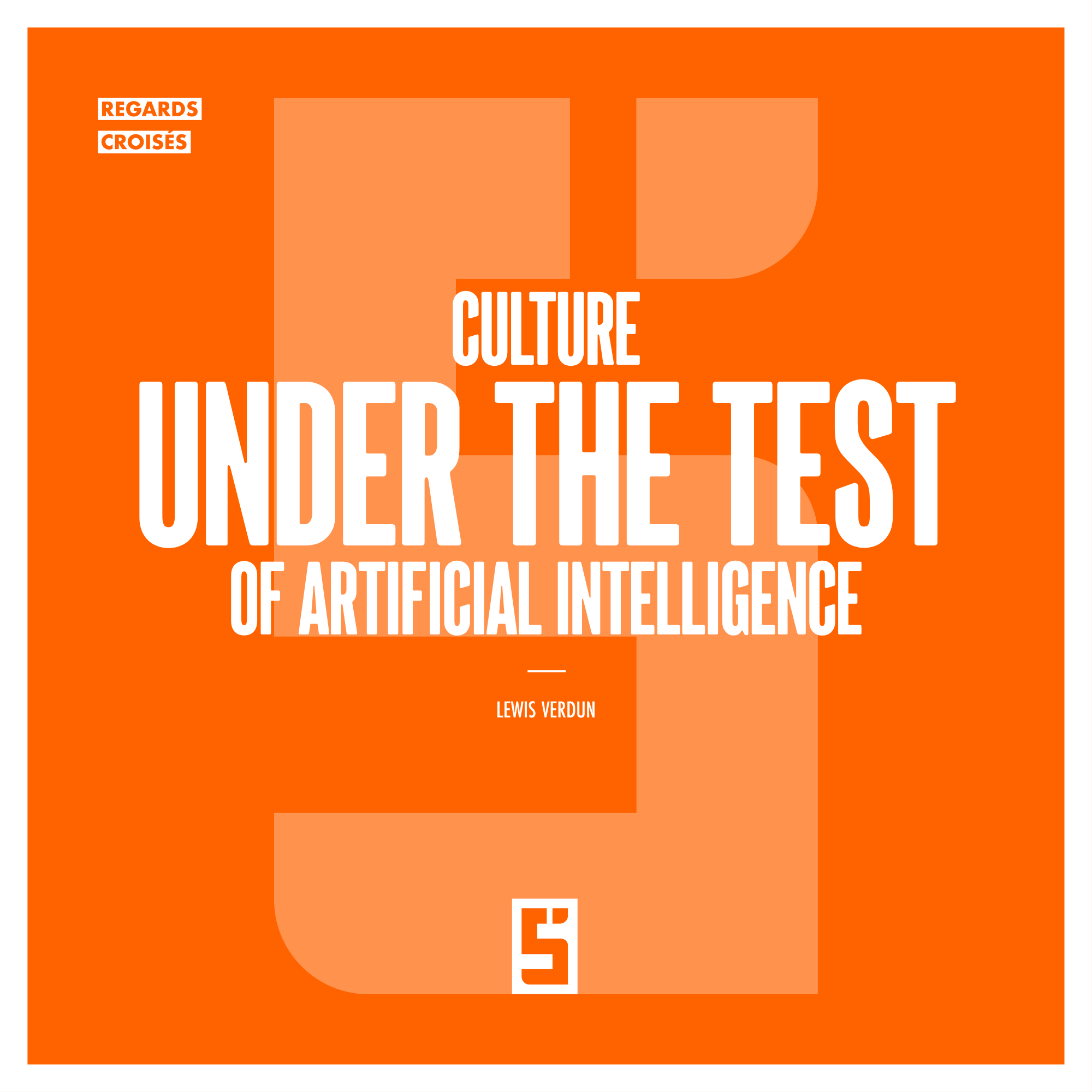
These important questions lie at the heart of Culture Under the Test of Artificial Intelligence by Léwis Verdun, published by Five Minutes in the Cross Perspectives collection. Written for a broad audience, the book explores the promises of generative AI, the risks of digital colonialism, the challenges surrounding creators' rights, and practical approaches to building ethical governance that reconciles technological innovation with cultural diversity.
Discover Culture Under the Test of Artificial Intelligence by Léwis Verdun today on Five Minutes.