


 Français
 Medicine is entering a period of profound transformation. For a long time, treatments were designed to meet the needs of the greatest number of patients through relatively standardized protocols. Today, bioengineering is opening the way to a different approach: understanding the biological characteristics of each patient in order to offer solutions that are more precise, more targeted, and sometimes even custom-made.
This evolution is based on the convergence of several disciplines. Genomics makes it possible to analyze how genes function, artificial intelligence accelerates the interpretation of medical data, biomaterials support tissue regeneration, and three-dimensional printing technologies make it possible to imagine the production of complex biological structures.
The question is therefore no longer simply how to treat a disease. It is also about determining how to anticipate its onset, repair damaged tissue, correct certain genetic abnormalities, or design biological models capable of predicting a drug’s effectiveness more accurately.
This precision medicine raises great hopes. It also raises major questions about safety, access to innovation, data protection, and the ethical limits of human intervention in living systems.
When Personalized Medicine Replaces Standard Treatment
Personalized medicine is based on a simple idea: two people with the same disease do not necessarily respond to treatment in the same way. Their genetic makeup, environment, age, diet, and even microbiome can influence the course of the disease and the effectiveness of care.
Thanks to genomic sequencing, healthcare professionals now have access to more precise information about certain biological variations. In oncology, for example, studying the molecular characteristics of a tumor can help doctors select a targeted treatment rather than a general therapy.
Artificial intelligence in healthcare strengthens this analytical capacity. It can compare very large amounts of data, identify correlations that are difficult to detect manually, and assist doctors in identifying at-risk profiles. It does not replace clinical judgment, but it can help refine diagnoses and better prioritize treatment options.
This evolution is also transforming prevention. Rather than intervening only when symptoms appear, personalized medicine seeks to identify certain biological signals at an earlier stage. In the future, monitoring tailored to each individual’s profile could make it possible to adjust lifestyle habits, examination frequency, or preventive treatments.
However, the personalization of care depends heavily on the quality of the data used. Databases that do not adequately represent the full diversity of populations may produce less reliable results for certain groups. Technological effectiveness must therefore be accompanied by efforts to improve the diversity of medical data and ensure equal access to diagnostic tools.
Gene Therapy: Correcting the Cause Rather Than the Symptoms
Gene therapy is one of the most emblematic fields of bioengineering. Its ambition is to intervene directly in a genetic mechanism involved in a disease rather than treating only its symptoms.
The first generations of gene therapies demonstrated that it was possible to introduce genetic material into certain cells in order to restore a biological function. More recent techniques aim to increase precision, reduce unintended modifications, and target specific regions of the genome.
These approaches include prime editing and various programmed gene-editing systems. Their goal is to modify a DNA sequence with greater precision, sometimes without fully cutting both strands of the molecule. Other technologies rely on enzymes capable of recognizing specific genetic sequences.
These advances could transform the treatment of certain rare, hereditary, or previously difficult-to-treat diseases. However, the ability to modify the genome does not mean that every application is immediately safe or acceptable.
Several challenges remain: delivering the editing tool to the relevant cells, ensuring the stability of the correction, assessing long-term effects, and preventing unintended changes. Treatments must also undergo rigorous clinical trials and extended follow-up.
The distinction between therapeutic intervention and human enhancement is another central issue. Correcting an abnormality responsible for a serious disease does not raise the same questions as modifying traits that could be passed on to future generations. The development of gene therapy therefore requires scientific, legal, and collective reflection.
Organoids and Bioprinting: Can Living Tissue Be Manufactured?
Organoids are small biological structures grown in laboratories from cells. They reproduce certain characteristics of an organ without constituting a complete replica of it.
Liver, intestinal, kidney, lung, and brain organoids can be used to study tissue development, observe disease mechanisms, or test responses to treatment. They provide a more realistic representation of human biology than simple two-dimensional cell cultures.
In the context of personalized medicine, it is becoming possible to create an organoid from a patient’s own cells. Researchers can then compare several treatments on this model before choosing the most promising therapeutic strategy. Such an approach could reduce unsuccessful trials and limit exposure to ineffective drugs.
Bioprinting, or biological printing, follows a complementary objective. This technology uses cells, biomaterials, and systems inspired by 3D printing to build biological structures layer by layer.
Creating a complete, functional, and directly transplantable organ remains a considerable challenge. An organ is not simply an assembly of cells. It must be vascularized, connected to the nervous system when necessary, able to withstand mechanical stress, and capable of functioning sustainably within the body.
In the shorter term, bioprinting may primarily be used to produce tissue models for research, biological implants, skin substitutes, or structures that support the repair of certain injuries.
These technologies could also reduce the use of certain animal models in the early stages of pharmaceutical development. They may not replace them in every situation, but they can provide complementary tools that more closely resemble human physiology.
From Animal Transplants to Medical Microrobots
The shortage of organs available for transplantation remains a global problem. Xenotransplantation, which involves using cells, tissues, or organs from another species, is being studied as a possible solution.
Advances in gene editing make it possible to modify certain genes in donor animals in order to reduce the risk of immune rejection or the transmission of infectious agents. Research in this field has led to several pioneering experiments, but many uncertainties remain.
The success of xenotransplantation depends in particular on controlling the immune response, ensuring long-term biological compatibility, and monitoring infectious risks. It also raises questions relating to animal welfare, social acceptance, and informed patient consent.
At the same time, bioengineering is developing tools on a much smaller scale. Experimental microrobots are being designed to travel through the body, deliver a drug to a precise location, reach an area that is difficult to access, or assist with minimally invasive procedures.
Their main advantage lies in targeting. A drug administered throughout the body can affect healthy tissue as well as the diseased area. A miniature system capable of concentrating its action in a specific location could improve treatment effectiveness while reducing certain side effects.
Regenerative hydrogels follow a similar principle. These water-rich materials can imitate certain properties of biological tissue. They can serve as a support for cells, gradually release therapeutic substances, or create an environment that promotes healing.
The combination of microrobots, intelligent biomaterials, and targeted delivery systems could transform surgery, oncology, and regenerative medicine. However, it will require reliable methods for controlling these devices, tracking their movement, and ensuring their removal after use.
Brain-Computer Interfaces Are Redefining Autonomy
Brain-computer interfaces make it possible to convert brain activity into a command that can be used by a machine. They can, for example, help a person with paralysis move a cursor, select letters, control a digital device, or interact with a prosthesis.
Some interfaces are non-invasive and rely on sensors placed on the surface of the skull. Others require implanted electrodes in order to obtain more precise signals. Each method has advantages and limitations in terms of accuracy, comfort, durability, and medical risk.
These technologies can support the autonomy of people who have lost speech or mobility. They may also contribute to rehabilitation after a stroke or improve the control of certain prosthetic devices.
However, their wider adoption raises unprecedented questions. Brain data is particularly sensitive. Its collection must be regulated in order to prevent misuse, involuntary surveillance, or insufficiently transparent commercial exploitation.
It is also important to distinguish between restoring a lost function and enhancing human capabilities. This boundary may become difficult to define when medical devices begin to acquire professional, educational, or recreational uses.
How Can Responsible Innovation Be Supported?
The future of bioengineering will not depend solely on laboratory performance. It will also depend on society’s ability to establish rules that are understandable, adaptable, and fair.
Several principles can guide this transformation:
- Assess the long-term safety of therapies and devices.
- Protect genetic, medical, and brain data.
- Ensure genuinely informed patient consent.
- Represent diverse populations in clinical research.
- Make innovation accessible beyond a privileged minority.
- Clearly distinguish therapeutic uses from enhancement uses.
- Involve patients, healthcare professionals, researchers, and citizens in decision-making.
An innovation may be technically feasible without being immediately desirable in every situation. Its evaluation must take into account its medical usefulness, the risks involved, its cost, the available alternatives, and its social consequences.
Public education also plays a decisive role. An insufficient understanding of genetics or artificial intelligence can create unrealistic expectations as well as excessive fears. Accessible and balanced information helps distinguish achievements that have already been demonstrated from promises that are still experimental.
Bioengineering is not limited to inventing new treatments. It is gradually transforming our definition of disease, repair, and perhaps even the human body itself. Personalized medicine, gene therapy, organoids, bioprinting, and brain-computer interfaces offer possibilities that would still have seemed futuristic only a few decades ago.
Their development must nevertheless be accompanied by constant vigilance. The most spectacular advances will only be truly useful if they are safe, understandable, regulated, and accessible. The challenge is not simply to push back the boundaries of what is possible, but to decide collectively in which direction they should be crossed.
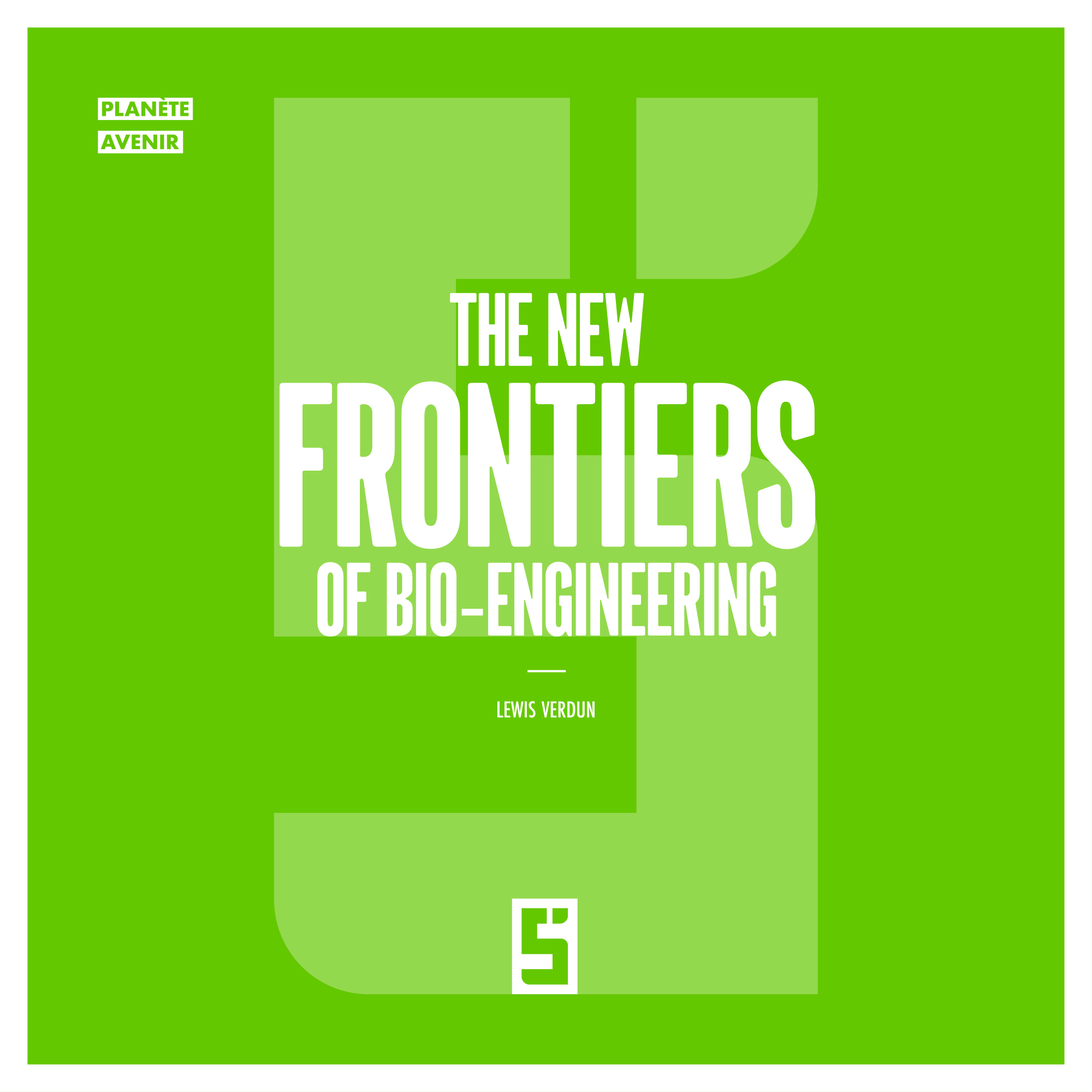
To explore these innovations in greater depth, understand their recent applications, and examine their technological, medical, and ethical implications, discover The New Frontiers of Bio-Engineering, by Léwis Verdun, published by Five Minutes in the PLANÈTE AVENIR collection.
Discover The New Frontiers of Bio-Engineering now on FIVE MINUTES.