


 Français
 A sudden feeling that you have already experienced a particular moment. An inexplicable attraction to an era, country, or culture you barely know. An intense fear whose origin you cannot identify. These experiences are intriguing because they sometimes seem to arise without any obvious cause. For some, they could represent traces of past lives. For others, they primarily reveal the extraordinary complexity of human memory.
Between spiritual beliefs, personal accounts, and psychological research, the subject has fascinated people for a long time. Above all, it raises another question that may be even more compelling: to what extent can we trust our own memories?
Our memory is neither a camera nor a perfectly reliable archive. It continually reconstructs our past from perceptions, emotions, information acquired after events, and personal interpretations. Understanding how memory works therefore allows us to approach past life memories differently, without immediately accepting them as proof or dismissing them as meaningless.
It is precisely this space between inner experience, psychology, and spiritual exploration that makes the subject so fascinating.
Why Do Some Experiences Feel as Though They Have Happened Before?
Déjà vu is probably one of the most common experiences capable of creating the impression that our memory extends beyond our personal history.
An unfamiliar street suddenly feels strangely familiar. A conversation seems to have taken place before in exactly the same way. For a few seconds, we may even feel convinced that we know what is going to happen next.
This sensation can be powerful enough to inspire many different interpretations. In certain spiritual traditions or approaches, it may be associated with reincarnation or with the persistence of memories originating from a previous existence.
Neuroscience and psychology, however, explore other possible explanations. Researchers study, among other things, the mechanisms of recognition and familiarity involved in the construction of our memories. A feeling of familiarity can therefore emerge even when we are unable to identify precisely where it comes from.
In other words, strongly feeling that a situation is familiar does not necessarily mean that we can determine why it feels that way.
This distinction is fundamental.
An experience can feel profoundly authentic to the person having it while still leaving its true origin unresolved.
Such caution helps us avoid two opposite reactions: automatically treating an experience of déjà vu as evidence of a previous life, or assuming that a psychological explanation removes all meaning from the experience.
In either case, the phenomenon remains interesting because it tells us something about our relationship with memory, identity, and our own personal history.
Our Memory Reconstructs the Past Rather Than Simply Recording It
We naturally tend to imagine our memories as files stored somewhere in the brain. When an event comes back to us, it may seem as though we simply need to open the correct file.
The actual workings of memory are much more dynamic.
When we remember something, our brain reconstructs an experience using different elements. Some details may remain relatively stable, while others change over time. Our emotions, current knowledge, stories heard since the event, and even the way a question is asked can influence this reconstruction.
This phenomenon helps explain why two people who experienced the same situation can retain different memories of it.
It also helps explain why someone can be extremely confident about the accuracy of a memory even when some of its details are incorrect.
Experimental research into false memories has shown that memory can be influenced by information received after an event or by certain forms of suggestion.
This reconstructive nature of memory becomes particularly important when examining past life memories.
A detailed mental image or a remarkably coherent story does not, by itself, constitute historical evidence. The subjective intensity of a memory and its factual accuracy are two different questions.
This does not mean that the experience is deliberately invented. A person can be completely sincere while attributing an origin to an inner experience that remains impossible to establish with certainty.
Regression Hypnosis: Why Caution Matters
Regression hypnosis occupies a particular place in discussions surrounding past lives. Some practices claim to guide people toward supposedly buried memories, sometimes presented as experiences belonging to a previous existence.
The experience can be emotionally powerful. It may produce detailed images, characters, places, and sometimes an entire narrative.
But detail and accuracy are not the same thing.
One of the main concerns involves suggestibility. In a context where a person expects to discover a past life, leading questions or certain expectations can contribute to the construction of a narrative that may subsequently be experienced as a genuine memory.
This risk becomes especially important when the experience is presented as a method capable of recovering events that definitely happened.
The issue then extends beyond the philosophical debate surrounding reincarnation. Inaccurate memories can have real consequences when they involve traumatic events, family relationships, or accusations against other people.
A cautious approach therefore involves distinguishing the possible introspective value of an experience from its value as historical evidence.
A session may encourage someone to reflect on their fears, desires, or inner conflicts. However, this does not automatically establish that the scenes experienced during the session correspond to events that actually occurred in another lifetime.
Why Do Stories About Past Lives Continue to Fascinate Us?
Although psychology provides possible explanations for some phenomena, it does not eliminate the cultural and existential appeal of stories about past lives.
Reincarnation has long been part of various religious and philosophical traditions. In the contemporary world, the subject has also entered discussions involving psychology, academic research, and individual spirituality.
Accounts involving young children are particularly well known. Some children spontaneously describe stories that they identify as belonging to another existence. Academic researchers have studied some of these accounts, documenting their characteristics and, when possible, examining certain reported details.
However, these studies remain open to different interpretations and do not establish a scientific consensus demonstrating reincarnation as a proven phenomenon.
This is precisely why the subject deserves a nuanced approach.
The significance of a story does not depend exclusively on our ability to prove its origin. Such accounts can also reveal something about the way human beings construct their identities and seek meaning in unusual experiences.
A person who believes they have lived in another place or another period may begin to reconsider their fears, relationships, or understanding of death.
The story can therefore acquire psychological or symbolic significance independently of whether it can be established as a historical reality.
How Can We Explore These Experiences Without Losing Our Critical Thinking?
Taking an interest in past lives does not require choosing immediately between absolute belief and complete rejection. Another approach is to examine the experience with curiosity while maintaining a clear distinction between what we feel, what we interpret, and what we can verify.
When experiencing déjà vu, for example, it may be useful to consider several possible explanations before reaching a conclusion. A feeling of familiarity may sometimes be connected to a situation, place, or piece of information encountered previously without leaving a clear conscious memory.
A particularly realistic dream may also contain elements originating from books, films, conversations, or previous experiences whose sources are no longer clearly identifiable.
When a memory emerges during a hypnosis session, it is especially important to consider whether the questions asked, the person’s expectations, or the surrounding context may have influenced the narrative.
More generally, several habits can help us explore these phenomena with greater perspective:
Write down an experience before conducting research that could influence your memory of it.
Clearly distinguish verifiable facts from personal impressions.
Consider several possible explanations instead of immediately searching for a single answer.
Remain cautious about anyone claiming to be able to uncover a previous existence with certainty.
Do not automatically treat a memory obtained through suggestion as factual evidence.
Seek support from a qualified professional if an experience causes significant psychological distress.
This cautious approach does not require abandoning spirituality. It simply helps maintain a boundary between personally exploring an experience and claiming that it proves a past event.
The question of past lives ultimately touches on something much broader than reincarnation: our need to understand who we are.
Our memories form an essential part of our identity, yet they are more malleable than we often imagine. A feeling of déjà vu, a vivid dream, or a scene emerging during a hypnosis session can therefore become a deeply meaningful experience even when its origin cannot be immediately identified.
Perhaps it is within this space of uncertainty that the subject becomes most interesting. We can acknowledge an inner experience without automatically turning it into a historical fact. Likewise, we can examine scientific knowledge about human memory without assuming that it answers every philosophical or spiritual question.
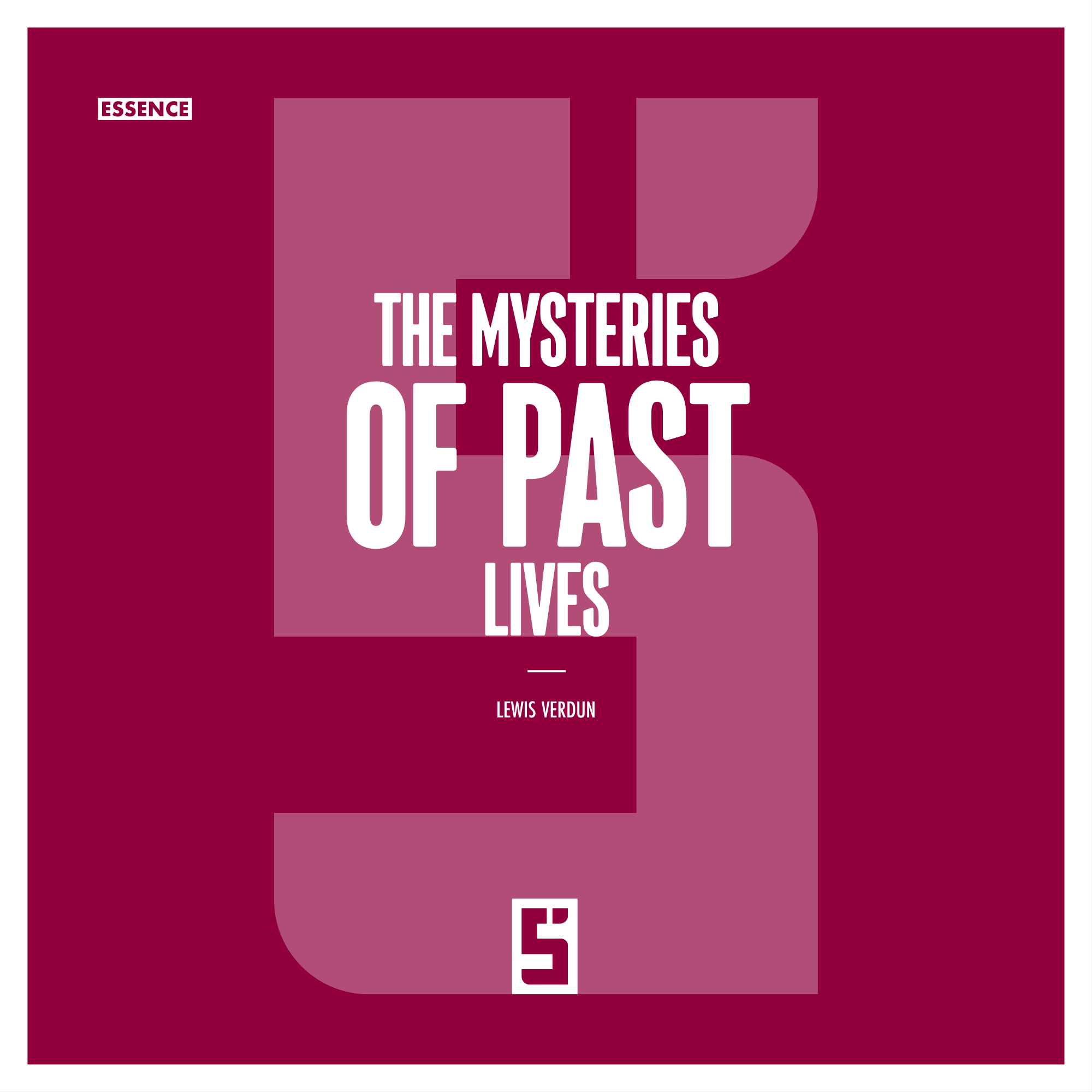
This approach, combining curiosity with caution, lies at the heart of The Mysteries of Past Lives by Léwis Verdun. The book explores accounts of reincarnation, spontaneous memories, regression hypnosis, false memories, and the debates surrounding these phenomena, while encouraging readers to distinguish between personal experience, interpretation, and evidence.
Discover The Mysteries of Past Lives by Léwis Verdun now on FIVE MINUTES and explore, with curiosity and critical thinking, the fascinating questions raised by memory and past lives.