


 Français
 Divorce is never simply a matter of signing a few documents or changing your marital status. For many people, it marks the end of an established daily routine, shared plans, and sometimes an identity that has been built around the relationship for many years.
The period that follows can feel strange and disorienting: life has to move forward even though many familiar reference points have disappeared. Living arrangements may change, family routines are disrupted, certain friendships evolve, and new financial responsibilities emerge. Even seemingly simple questions — what to do at the weekend, who to travel with, or how to organize a family celebration — can suddenly become complicated.
Yet this period of transition can also create an opportunity for reflection that may not have existed before. Rebuilding after divorce does not mean erasing what happened. Instead, it means understanding what has changed, gradually creating a new sense of stability, and imagining a different way forward.
So how can a separation become a genuine new beginning without trying to move too quickly?
Accepting That Separation Can Also Transform Your Identity
When an important relationship ends, the loss does not concern only the partner. Some habits, expectations, and personal projections for the future may disappear as well.
For years, many decisions may have been made as a couple: choosing a home, planning holidays, managing expenses, spending time with friends, or imagining the future. The idea of “we” may have occupied an important place in the way everyday life was organized and understood.
After separation, returning to “I” can therefore require a genuine process of adjustment.
This helps explain why some people experience a sense of disorientation even when they were the ones who wanted the divorce. They may firmly believe that ending the relationship was necessary while simultaneously experiencing sadness, fear, or uncertainty.
These emotions are not necessarily contradictory. They simply reflect the significance of the change taking place.
Rebuilding yourself after separation also means rediscovering your own preferences: your desires, priorities, values, and personal goals.
Simple questions can help: What used to make me happy before this relationship? What do I want to keep from my previous life? What do I no longer want to repeat? Which personal projects did I put aside? What would I like my daily life to look like now?
There is no need to find all the answers immediately. Simply beginning to ask these questions can be an important step toward becoming the active decision-maker in your own life again.
Finding Stability Before Trying to Rebuild Everything
After a major breakup, the desire to radically transform your life can be powerful. A new home, a new city, new friends, a new relationship, a new job — the temptation to start everything from scratch is understandable.
But a new beginning after separation does not necessarily need to be dramatic.
During the first weeks or months, restoring simple routines may be more beneficial than introducing even more major changes. Getting enough sleep, staying physically active, organizing expenses, maintaining regular social contact, and structuring your days can provide essential foundations that are sometimes underestimated.
Stability becomes particularly important when children are involved. For them, separation also represents a significant change. They may have to adjust to living between two homes, adopting new routines, and dealing with emotions they do not always know how to express.
In this context, predictability can be valuable. Knowing which days will be spent with each parent, maintaining certain routines, understanding how holidays will be organized, or simply knowing who will pick them up from school can help restore a sense of security.
Rebuilding also has a financial dimension. Maintaining two households generally costs more than maintaining one. Housing, budgets, insurance, expenses related to children, and sometimes the division of assets can require people to reconsider long-established financial habits.
Taking a clear look at income, expenses, and financial obligations is far from a minor concern. Regaining control over these practical aspects can often reduce some of the uncertainty surrounding life after divorce.
Rebuilding therefore begins less with a spectacular transformation and more with a series of small, consistent decisions.
Regaining Self-Confidence Without Trying to Prove Anything
Separation can have a profound effect on self-esteem. Some people begin questioning what went wrong, whether they will ever be able to love again, or whether they could have acted differently.
The risk is that a new beginning becomes a performance: trying to succeed immediately, filling every moment with activities, displaying happiness to others, or quickly entering another relationship in search of reassurance.
However, self-confidence after a breakup is rarely rebuilt through other people's approval.
It often returns through experience: making a decision independently, solving a problem that a former partner used to handle, returning to an activity that had been abandoned, completing a personal project, or simply realizing that you are gradually learning to manage your new life.
Each successful experience reinforces a simple idea: “I can move forward on my own.”
Social connections also play an essential role. After divorce, some friendships that were shared by the couple may become more distant, while others may grow stronger. Reconnecting with old friends, spending more time with family, or developing new relationships through sports, cultural activities, professional networks, or community groups can be helpful.
The objective is not to eliminate every moment of solitude. Instead, it is to prevent isolation from becoming the only response to separation.
Professional support may also be valuable when emotional distress becomes difficult to manage or persists over time. Psychologists, therapists, family mediators, legal advisers, and financial professionals address different needs, but each can help make certain challenges more understandable and manageable.
Practical Ways to Begin Rebuilding Your Life
Resilience after divorce does not follow the same timeline for everyone. Some people regain stability relatively quickly, while others need considerably more time. The length of the relationship, the circumstances surrounding the separation, the presence of children, financial resources, and the level of available support can all influence the process.
Rather than setting a deadline by which you are supposed to have “moved on,” it can be more useful to regularly observe the progress you are making.
Emotionally, identifying what is causing the greatest difficulty can help clarify your needs. Writing down your concerns or sharing them with someone you trust can already provide greater perspective.
In everyday life, establishing a few simple routines can help restore familiar reference points. Regular schedules, personal activities, and weekly planning can gradually create a greater sense of stability.
Financially, clearly identifying income, fixed expenses, and variable costs can help restore control over an area that may become particularly stressful following separation.
Your social life also deserves attention. Reconnecting with a friend, accepting an invitation, or beginning a new activity can gradually expand your social environment.
It can also be helpful to choose a personal project that can realistically be achieved within the next few months. It does not need to be ambitious. The purpose is primarily to regain a sense of direction that does not depend on the previous relationship.
Another useful approach is to distinguish between what you can control and what you cannot.
The decisions made by a former spouse, their reactions, or the direction of their new life are largely beyond your control. By contrast, the way you organize your home, manage your finances, maintain relationships, take care of your health, and prepare for future projects belongs much more clearly within your own sphere of influence.
Recognizing this distinction can prevent you from spending considerable emotional energy on situations over which you ultimately have very little control.
Starting Over Does Not Mean Returning to Your Old Life
The expression “starting over after divorce” can create the impression that what was lost needs to be replaced as quickly as possible: finding another partner, rebuilding a couple, and returning to a version of normality similar to the one that existed before.
But why should your new life have to reproduce your old one?
Separation can also be an opportunity to redefine what personal success means. For some people, this may eventually include a new relationship. For others, the first priority may be independence, a professional project, a different relationship with their children, new friendships, or simply a calmer everyday life.
Reinventing yourself does not mean rejecting your past either. A relationship that has ended may still have included happy moments, valuable lessons, and perhaps children who will continue to connect both former partners.
The challenge is therefore less about erasing the past and more about integrating it into your personal story.
This perspective can profoundly change the way you approach rebuilding after divorce. The goal is no longer to become exactly the person you were before the relationship. Instead, it is to understand how the experience has changed you and consciously decide what comes next.
The same principle applies to a possible future romantic relationship. Before immediately looking for another partner, it may be useful to identify what you now expect from a relationship: communication, independence, shared values, conflict management, common goals, or a healthier balance between individual life and life as a couple.
A new relationship can then become less of an attempt to fill the space left by the previous one and more of a conscious choice made from a position of greater stability.
Divorce undeniably represents a rupture. But a rupture does not necessarily mean permanent failure. With time, practical foundations, and the right environment, it can also become a period during which a person learns to better understand their needs and gradually regain control over the direction of their life.
Rebuilding after divorce rarely depends on one spectacular decision. Instead, it develops through many ordinary actions: bringing structure back into daily life, restoring financial stability, asking for help when necessary, protecting children from conflict, reconnecting with others, and beginning to imagine personal projects again.
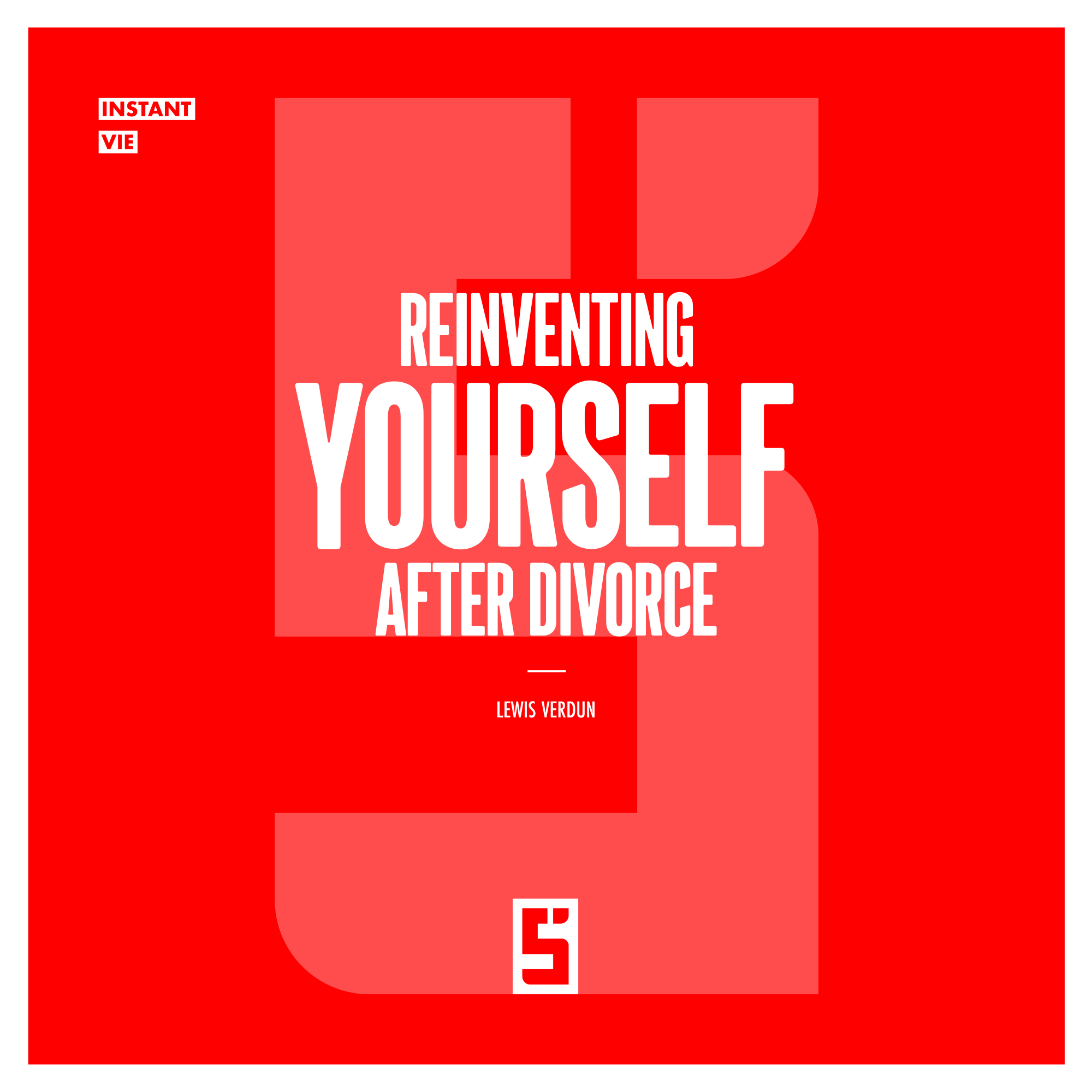
For those who want to explore these different aspects in greater depth, Se réinventer après un divorce by Léwis Verdun offers a clear, compassionate, and structured approach to the period following separation. The book helps readers reflect on the emotional, family, social, and financial dimensions of this transition, with the aim of finding new reference points and approaching the future with greater confidence.
Discover Reinventing Yourself After Divorce by Léwis Verdun now on FIVE MINUTES and turn this period of change into the starting point for a more conscious new beginning.