


 Français
Traditions have always played an essential role in shaping societies. Whether through family celebrations, religious rituals, culinary practices, or community ceremonies, they represent a cultural heritage passed down from generation to generation. However, in an era of globalization, social media, and rapid social change, their place in modern society seems increasingly uncertain.
The evolution of customs raises a fundamental question today: how can we preserve our cultural identity while adapting to the realities of the modern world?
Contrary to a widely held belief, traditions are not necessarily destined to disappear. Some gradually lose their importance, while others reinvent themselves, take on new forms, or experience an unexpected revival.
Technological developments, international migration, and changing individual aspirations profoundly influence how people experience their cultural heritage. Between continuity and transformation, customs have become valuable indicators of the changes taking place within our societies.
Understanding these dynamics allows us not only to appreciate the richness of our cultural heritage but also to imagine ways of passing traditions on to future generations without trapping them in the past.
Why Do Cultural Traditions Evolve Alongside Society?
Customs are not immutable practices. They develop over time under the influence of historical events, human interactions, and economic transformations.
Each generation inherits cultural practices that it interprets according to its own needs, beliefs, and environment.
Social Changes Are Transforming Collective Habits
Urbanization, changing family structures, and new forms of work organization are profoundly reshaping traditional practices.
In the past, certain family ceremonies could bring together an entire village for several days. Today, in major cities, professional and financial constraints sometimes encourage shorter and more intimate celebrations.
Weddings are a particularly revealing example. In many cultures, they now combine traditional elements with contemporary practices: modern clothing, simplified ceremonies, online broadcasting of celebrations, and remote participation by relatives.
This transformation does not necessarily indicate an abandonment of cultural values. Rather, it reflects the adaptation of customs to modern living conditions.
Globalization Encourages Cultural Exchange
Cultural globalization brings together populations that were once separated by significant geographical boundaries.
Travel, migration, international media, and commercial exchanges facilitate the circulation of cultural practices.
As a result, certain local culinary traditions become popular abroad, while celebrations originating in other parts of the world gradually become integrated into new societies.
These interactions can enrich cultures by encouraging discovery and creativity.
However, they also raise concerns about cultural homogenization. When the same products, entertainment, and consumer habits spread worldwide, certain local practices risk losing their visibility.
The challenge, therefore, is to strike a balance between cultural openness and preserving the unique characteristics that make each community distinctive.
Younger Generations Are Redefining Their Relationship with Customs
Younger generations play a central role in the evolution of cultural traditions.
More connected to international influences, they may question certain inherited practices, particularly when those practices appear incompatible with their values or aspirations.
However, questioning traditions does not necessarily mean rejecting cultural heritage.
On the contrary, many young people are showing renewed interest in local languages, traditional clothing, artisanal skills, and regional cuisines.
The difference often lies in how they embrace these cultural elements: they seek greater freedom, creativity, and meaning in their participation in traditional practices.
Traditions thus become sources of identity that individuals can reinterpret.
Social Media and Globalization: A New Life for Customs
The development of digital technologies is one of the most influential factors in transforming contemporary cultural practices.
The Internet has profoundly changed how knowledge, beliefs, and collective customs are transmitted.
Social Media Is Becoming a Space for Cultural Transmission
For a long time, the transmission of traditions relied primarily on families, elders, and community institutions.
Today, social media offers new channels for sharing this knowledge.
On TikTok, Instagram, Facebook, and YouTube, content creators showcase traditional recipes, explain the meaning of ancestral ceremonies, and teach artisanal techniques.
These publications sometimes allow little-known practices to reach an international audience.
They can also spark renewed interest among young people who discover elements of their own cultural heritage through digital screens.
However, this visibility comes with limitations. The demand for short, visually appealing content can lead to the oversimplification of certain traditions or their presentation without their true historical or spiritual context.
Digital cultural transmission must therefore be accompanied by efforts to explain and contextualize traditional practices.
Diaspora Communities Keep Traditions Alive Across Borders
International migration also contributes to the transformation of customs.
When a community settles in a new country, it often preserves certain practices to maintain a connection with its place of origin.
Religious celebrations, family meals, native languages, and traditional ceremonies become ways of preserving a collective identity.
However, these practices evolve through contact with the new cultural environment.
Recipes may be adapted to available ingredients, celebrations adjusted to work schedules, and certain rituals reorganized to accommodate local circumstances.
These adaptations give rise to hybrid cultural expressions that combine ancestral heritage with contemporary influences.
Rather than necessarily representing a loss of authenticity, they illustrate the ability of traditions to accompany human migration.
Artificial Intelligence Opens Up New Possibilities
Artificial intelligence technologies could also play a role in preserving traditions.
They can contribute to transcribing oral testimonies, organizing cultural archives, and developing educational tools dedicated to traditional languages and skills.
In certain situations, these technologies can facilitate access to knowledge that is difficult to transmit through conventional methods.
However, their use raises important questions: who owns the cultural data being collected? How can misrepresentation be avoided? How can respect for the communities concerned be guaranteed?
Technology can support cultural transmission, but it cannot replace the role of tradition bearers, whose experience and collective memory give these practices their deeper meaning.
Preserving Traditions: Between Cultural Identity and Modernity
In the face of contemporary transformations, preserving customs does not necessarily mean maintaining them exactly as they existed in the past.
A tradition can evolve while retaining its fundamental values.
Intangible Cultural Heritage: A Living Treasure
Cultural heritage is not limited to historical monuments and ancient objects.
It also includes knowledge, oral expressions, social practices, rituals, and skills passed down between generations.
Through its 2003 Convention for the Safeguarding of the Intangible Cultural Heritage, UNESCO emphasizes the importance of these practices in maintaining cultural diversity and community continuity.
This approach recognizes that living heritage is not frozen in time: it is constantly recreated by the groups that transmit it.
A traditional dance, for example, can incorporate new forms of presentation without losing its cultural significance.
Similarly, an artisan can adapt traditional techniques to contemporary materials while preserving knowledge inherited from previous generations.
What matters most is the ability of communities to recognize their traditions as an integral part of their identity.
Cultural Tourism: Opportunity or Threat?
The development of cultural tourism offers new opportunities to promote local customs.
Festivals, ceremonies, artisanal activities, and gastronomic experiences attract visitors interested in discovering different ways of life.
This activity can generate income, support artisans, and encourage younger generations to maintain certain cultural practices.
However, when traditions are primarily adapted to meet visitors' commercial expectations, they may lose part of their original meaning.
Some ceremonies risk becoming mere performances, disconnected from their social or spiritual functions.
Cultural tourism must therefore respect the communities that maintain these traditions and allow them to determine how their heritage is presented.
Cultural Appropriation Calls for Reflection and Respect
In a world where cultural references circulate rapidly, distinguishing respectful cultural exchange from problematic cultural appropriation can sometimes be difficult.
Drawing inspiration from another culture can encourage creativity and dialogue between communities.
However, using sacred symbols without understanding their meaning, commercially exploiting traditional knowledge without acknowledging its holders, or reproducing cultural practices in distorted ways can create tensions.
Preserving traditions therefore also requires greater recognition of their history and symbolic value.
Cultural openness is most meaningful when accompanied by listening, respect, and the active participation of the communities concerned.
How Can We Pass Customs on to Future Generations?
Cultural transmission represents one of the main challenges facing modern societies.
To remain alive, traditions must be understood, practiced, and adapted by those who inherit them.
It is therefore not enough to ask younger generations to reproduce ancient gestures. Their origins, meanings, and purposes must also be explained.
Several practical initiatives can encourage this transmission:
Organize intergenerational gatherings to facilitate the sharing of experiences, stories, and collective memories.
Document traditional practices through recordings, photographs, and testimonies to preserve cultural knowledge.
Promote local languages by encouraging their use within families, educational institutions, and cultural activities.
Support local artisans and producers to preserve traditional skills and encourage their transmission.
Use digital tools to make traditions accessible to a wider audience, particularly younger generations.
Involve young people in cultural events to strengthen their participation and sense of belonging.
Give Traditions Meaning Rather Than Imposing Them
A tradition passed down solely as an obligation risks gradually losing its appeal.
Conversely, when a practice is explained and placed within its historical and cultural context, it can become a source of pride and curiosity.
Families, educational institutions, and cultural associations should therefore prioritize dialogue.
Why do we celebrate a particular festival? What is the origin of a ritual? What values does a ceremony seek to transmit?
These questions make it possible to move beyond simply repeating established habits and develop a deeper understanding of their significance.
Encourage Participatory Cultural Transmission
Younger generations should also have opportunities to contribute to the transformation of traditions.
Cooking workshops, documentary projects, community festivals, and digital initiatives can provide practical opportunities for involvement.
This approach helps develop a sense of ownership and responsibility.
A custom that can be discussed, understood, and reinterpreted has a greater chance of finding its place in an evolving society.
Preserve Without Freezing: Finding the Right Balance
Preserving traditions does not mean rejecting all forms of change.
Certain practices may need to be adapted to reflect evolving rights, social attitudes, and living conditions.
The objective is to distinguish the essential elements of a tradition from those that can change without compromising its meaning.
This approach encourages a living culture capable of engaging with modernity while maintaining its historical foundations.
The evolution of customs ultimately reveals an essential characteristic of human societies: their ability to combine heritage with change.
Cultural traditions do not automatically disappear under the influence of globalization, migration, or digital technologies. They can transform, acquire new meanings, and continue to play an important role in shaping individual and collective identities.
The real challenge lies in preserving their richness without preventing their adaptation. This requires recognizing the role of communities, supporting intergenerational transmission, and encouraging a form of modernity that respects cultural diversity.
As international exchanges intensify and technologies redefine our habits, reflecting on these issues becomes essential to understanding contemporary societies.
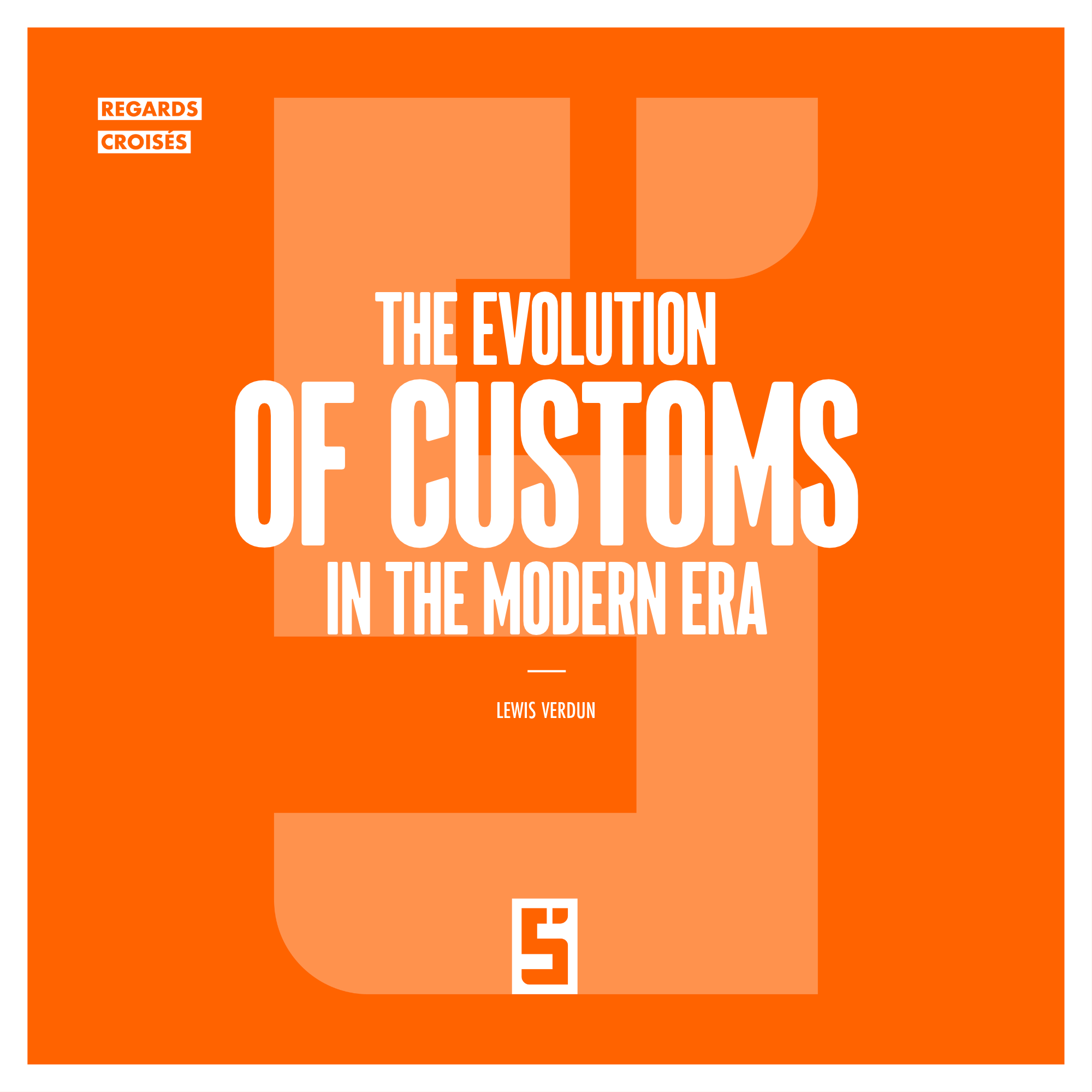
For readers wishing to explore these questions further, L’évolution des coutumes à l’ère moderne (The Evolution of Customs in the Modern Era) by Léwis Verdun offers an accessible and balanced analysis of the transformations affecting family rituals, culinary traditions, religious practices, and living cultural heritage. The book encourages readers to reconsider the relationships between cultural identity, globalization, and modernity.
Discover The Evolution of Customs in the Modern Era by Léwis Verdun on FIVE MINUTES today and deepen your understanding of how traditions continue to evolve in an ever-changing world.