


 Français
Have you ever felt exhausted even though your day didn't seem particularly busy? Perhaps you finished your work assignments, prepared meals, answered important messages, and organized the next day's activities. Yet, even when you finally sit down to relax, your mind keeps running. You think about groceries to buy, an appointment you must remember, or a conversation you still need to have.
This feeling of never being able to truly switch off has a name: mental load.
Often invisible, mental load refers to the constant effort required to anticipate, organize, remember, and coordinate everyday responsibilities. Unlike physical fatigue, it doesn't necessarily disappear when you sit down or stop being active.
In a world where demands on our attention continue to multiply, reducing mental load has become an essential part of maintaining our well-being. However, achieving this requires more than simply managing our schedules better or becoming more productive.
What if the solution was actually to rethink our relationship with responsibilities, time, and rest?
Why Does Our Brain Remain Constantly Busy?
Our brains have a remarkable ability to anticipate future events, remember obligations, and organize complex activities. These abilities are essential for managing everyday life.
However, they can become exhausting when they are constantly being used.
Imagine someone who must simultaneously think about work deadlines, their children's needs, household expenses, medical appointments, and administrative responsibilities.
Even when this person isn't actively performing any of these tasks, they continue to carry the mental responsibility for them.
It is precisely this accumulation of invisible responsibilities that contributes to cognitive overload.
Working memory, which allows us to temporarily hold information in mind while performing tasks, has limited capacity. When too much information competes for our attention, it becomes harder to concentrate, make decisions, and prioritize effectively.
This constant mental activity can manifest in several ways:
Difficulty concentrating on a single activity.
A persistent feeling that you've forgotten something.
Increased irritability when unexpected situations arise.
Mental fatigue that is present from the moment you wake up.
Difficulty fully enjoying moments of relaxation.
Feelings of guilt when you're doing nothing.
These experiences do not necessarily indicate a medical condition. However, they may suggest that everyday life has become excessively demanding.
Another factor that intensifies mental overload is the constant stream of interruptions.
Notifications, emails, phone calls, instant messages, and family requests fragment our attention. Each interruption requires additional mental effort to return to the original task.
Over time, this fragmentation can reinforce the feeling of being constantly busy without making meaningful progress.
To reduce mental fatigue, it is therefore essential to decrease not only the number of tasks we perform but also the amount of information and the number of decisions occupying our minds.
Invisible Tasks: Why Do Some Responsibilities Feel Heavier Than Others?
In a household, workplace, or family, responsibilities are not limited to visible actions.
Grocery shopping is a concrete task. However, noticing that the refrigerator is running low, planning meals, checking supplies, writing a shopping list, and organizing purchases all involve mental effort before the shopping even begins.
This distinction is fundamental.
Someone may actively participate in household chores while leaving another person responsible for organizing everything.
In other words, sharing tasks does not necessarily mean sharing the mental load.
This situation frequently occurs in family life, where responsibilities involving anticipation, planning, and coordination may be distributed unequally.
It also exists in professional environments.
Some employees naturally become the people responsible for reminding others about deadlines, organizing meetings, welcoming new team members, or resolving everyday problems.
These contributions are sometimes overlooked, even though they require constant attention and coordination.
The issue is therefore not only the amount of work involved but also how responsibility for thinking about that work is distributed.
To build more balanced relationships, an important shift involves moving from a culture of helping to one of shared responsibility.
Consider a simple example.
When someone tells their partner, "Just tell me what I need to do, and I'll do it," they are offering to help complete tasks. However, they are still leaving the other person responsible for identifying, planning, and monitoring those tasks.
By contrast, taking full responsibility for an area of daily life means managing every step, from anticipating needs to completing the necessary actions.
This difference can fundamentally transform everyday organization.
It can also help reduce relationship tensions because responsibilities become clearer and less dependent on one individual.
Recognizing invisible tasks is therefore an essential first step toward reducing mental load without simply transferring the burden from one person to another.
Finding a Healthier Balance Between Activity and Rest
Modern society places considerable value on efficiency, availability, and the ability to manage multiple responsibilities simultaneously.
As a result, rest sometimes becomes a secondary activity, something we allow ourselves only after every obligation has been completed.
However, this approach presents a major problem: everyday responsibilities never completely disappear.
There is always another message to answer, a document to organize, or a task to prepare.
Waiting until everything is finished before resting often means postponing recovery indefinitely.
To maintain a healthy work-life balance, we need to recognize rest as a fundamental necessity rather than a reward for productivity.
This also means learning to create meaningful boundaries between different parts of the day.
Mentally disconnecting requires more than simply stopping work. It also involves reducing the internal pressure associated with unfinished responsibilities.
Certain habits can make this transition easier.
For example, ending your workday by writing down the next day's priorities allows you to keep track of important tasks without repeatedly thinking about them throughout the evening.
Similarly, establishing notification-free periods can help restore more sustained and focused attention.
Activities that engage the senses in enjoyable ways, such as walking, gardening, reading, or listening to music, can also provide a welcome break from everyday concerns.
The goal is not to transform every free moment into another personal development exercise.
Instead, it is about rediscovering spaces where no performance is expected.
This distinction is particularly important: a method designed to reduce everyday stress should not become yet another obligation.
Organizations also have an essential role to play.
According to the World Health Organization's research on mental health at work, unfavorable working conditions, including excessive workloads and a lack of control over one's activities, can pose risks to mental health.
Preventing exhaustion cannot therefore depend exclusively on individual efforts.
Realistic objectives, clearly defined responsibilities, greater recognition of invisible work, and respect for rest periods are equally important measures.
How Can You Reduce Mental Load Without Making Life More Complicated?
One problem with traditional organization advice is that it sometimes recommends adding new systems and routines to an already overloaded schedule.
Using multiple applications, tracking tools, and productivity routines can paradoxically increase the number of decisions we need to make.
A more effective approach is to prioritize simplicity.
Here are several practical ways to gradually regain mental clarity and create more space in your everyday life.
Identify What Is Really Occupying Your Mind
For a few days, write down the concerns that repeatedly come to mind.
Don't limit yourself to the tasks you physically perform. Include everything you must anticipate, remember, coordinate, or monitor.
This exercise often reveals that a significant portion of mental fatigue comes from responsibilities that remain invisible to others.
Distinguish What Matters From What Can Wait
Not every responsibility requires immediate attention.
For each task, ask yourself:
Is it genuinely urgent?
What would happen if I postponed it?
Am I really the only person who can handle it?
Could it be simplified, shared, or eliminated?
Is the level of perfection I'm expecting truly necessary?
These questions encourage an approach to organization based on real priorities rather than a constant feeling of urgency.
Share Full Responsibility for Tasks
At home or in the workplace, distribute areas of responsibility rather than assigning isolated actions.
Ideally, the person responsible for a particular area should be able to anticipate needs, organize the necessary steps, and follow through without relying on constant reminders.
This independence reduces the need for one person to supervise every detail.
Use One Simple Organization System
A shared calendar, a common to-do list, or even a notebook may be enough.
What matters is that important information is accessible to everyone involved and does not depend entirely on one person's memory.
Avoid multiplying organizational tools if maintaining them requires more effort than the tasks they are supposed to simplify.
Protect Moments Without Obligations
Try to regularly reserve periods when you have nothing to organize, manage, or optimize.
These moments can be brief. Their value lies in giving your mind an opportunity to temporarily release the pressure of constant anticipation and vigilance.
You can also make small adjustments to common situations:
Groceries and meals: Give someone full responsibility for shopping or use a shared list to avoid constant reminders.
Family appointments: Keep important dates and commitments in a calendar accessible to everyone.
Work-related demands: Establish clear availability hours and clarify expectations outside working hours.
Repetitive decisions: Simplify recurring choices through a few flexible habits.
Household responsibilities: Clearly assign different areas of responsibility so that one person does not have to supervise everything.
Rest and recovery: Schedule moments of relaxation without considering them wasted time.
These changes may not produce immediate results.
However, they can gradually reduce the number of responsibilities that must be constantly kept in mind.
It is also important to recognize the limitations of individual solutions.
When mental overload results from a poorly organized workplace, a deeply unequal distribution of responsibilities, or significant financial and practical constraints, personal organization techniques alone are unlikely to be sufficient.
Collective changes may then be necessary.
Finally, if fatigue becomes persistent, is accompanied by significant sleep difficulties, or noticeably affects everyday functioning, consulting a healthcare professional can help identify possible causes and appropriate support.
Toward a Lighter Life: Learning to Do Less and Carry Less
Reducing mental load does not mean abandoning responsibilities or attempting to eliminate every source of stress.
Instead, it means developing a healthier and more balanced relationship with our obligations.
This process involves several complementary changes: recognizing invisible tasks, distributing organizational responsibilities more fairly, simplifying everyday decisions, and protecting time for recovery.
It also encourages us to question a widespread belief: being a responsible person does not mean having to think about everything, all the time.
Sometimes, the most beneficial change is not becoming more efficient but accepting that certain tasks can wait, some decisions can be shared, and certain expectations can be abandoned.
This reflection goes far beyond personal organization. It touches on relationship quality, fairness in the distribution of responsibilities, and the way we collectively understand work and rest.
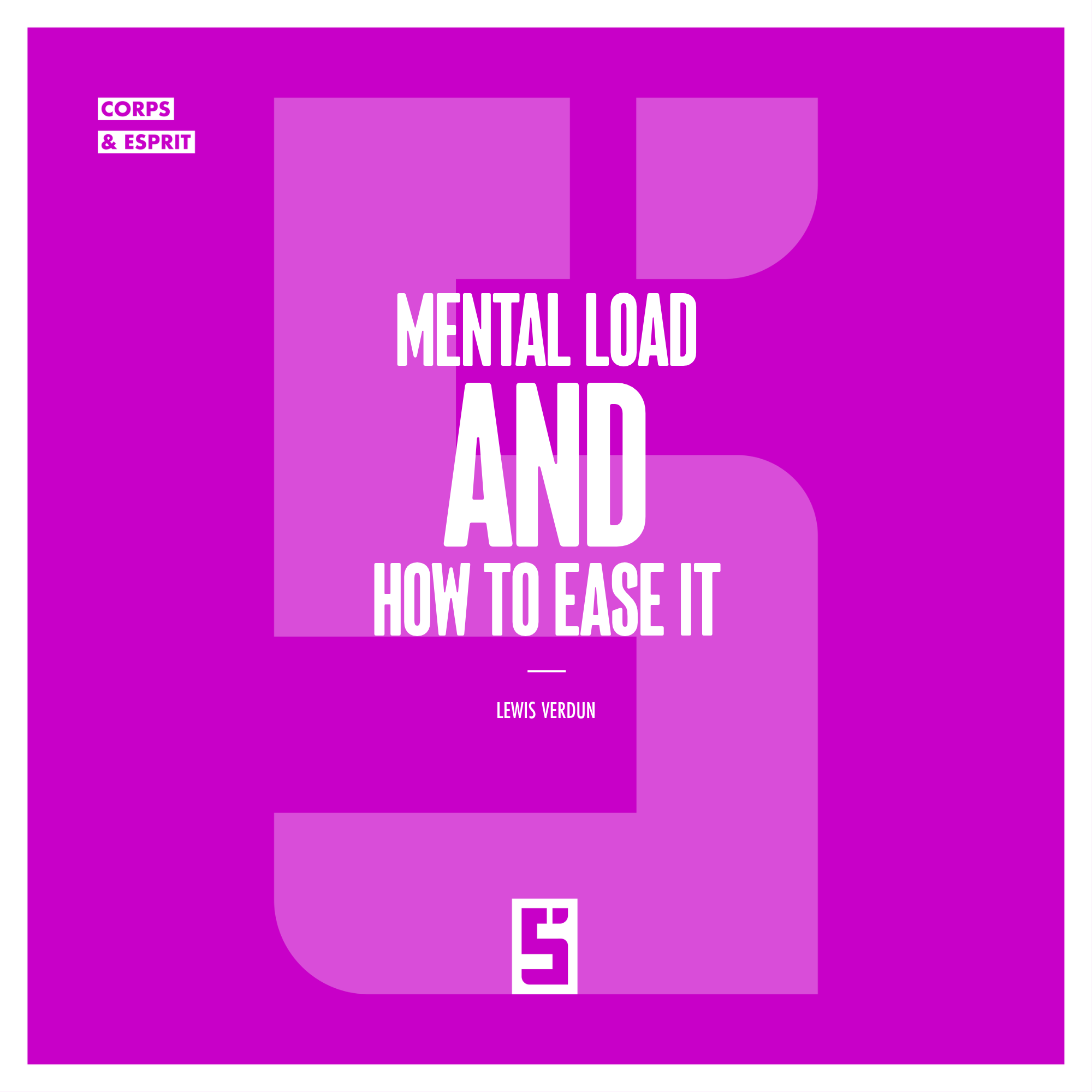
For anyone wishing to explore these issues further, Mental Load and How to Relieve It, by Léwis Verdun, offers an accessible perspective on the mechanisms behind this invisible burden.
Drawing on recent research published in 2024 and 2025, the book examines the causes of cognitive fatigue, inequalities in the sharing of responsibilities, and practical ways to improve everyday life.
Its approach highlights an important idea: reducing mental load is not simply about completing tasks more efficiently. It is also about transforming the conditions under which those tasks are organized and managed.
Because a clearer, more peaceful mind sometimes begins with a better understanding of what is weighing it down, taking a few minutes to reflect on our daily habits can be a meaningful first step toward lasting change.
Would you like to regain greater peace of mind, mental clarity, and freedom in your daily life? Discover Mental Load and How to Ease It by Léwis Verdun on FIVE MINUTES today and explore practical strategies to sustainably reduce your mental load and create a more balanced everyday life.